AI news roundup May 2026: what every business owner must act on now
TL;DR
Australia's AI adoption sits at just 7%, not a crisis, a competitive opening. HMRC has committed £175 million to AI over ten years, Singapore is training 40,000 AI-ready professionals, and Google has deployed a system that improves its own code. Every week that passes without a deliberate AI strategy is a week the gap between you and early movers gets wider.
Why Australia's 7% adoption rate is your competitive advantage
Assistant Minister Andrew Leigh flagged that only 7% of Australian businesses are broadly using AI. In a market where 93% of your competitors are not seriously using AI, getting in now is not trend-chasing, it is a structural advantage that compounds over time.
The Federal Budget did muddy the water. The government axed a $760 million commercialisation programme covering CSIRO and other science initiatives, which has researchers worried about the long-term commitment to innovation. That is their problem. If you are waiting for government policy to lead the way on AI adoption, you are already behind businesses in Singapore, the UK, and the US that are not waiting for anyone.
What does HMRC's £175 million deal with Quantexa actually prove?
HM Revenue & Customs signed a £175 million ten-year deal with Quantexa to deploy AI across the department. The focus: data analysis, fraud detection, and operational efficiency. This is not a pilot programme. This is a government institution staking serious long-term money on AI handling mission-critical operations at scale.
If the taxman is spending £175 million on AI, the question of whether the technology is proven has been answered.
For any business owner still asking whether AI is "really ready", this is your answer. The only question now is where you are deploying it.
What is Google's AlphaEvolve and why does it change the timeline?
Google DeepMind's AlphaEvolve is a recursive self-improving AI already operating inside Google. It uses Gemini to enhance its own AI infrastructure, chip design, and training processes. The AI is actively modifying its own architecture to improve performance.
The AI tools available to you in 18 months will not look like the ones available today, because the systems building them are already improving themselves.
For business owners, the practical implication is this: get fluent with AI now, while the tools are learnable. The organisations building AI literacy today will absorb each new capability as it arrives. Those starting from scratch in 2027 will face a much steeper climb.
Google also unveiled AI features for Android 17 at the Android Show 2026, including 3D emoji and custom AI-generated widgets. The Gemini 2.0 Flash Thinking Experimental model points toward AI capable of "runtime reasoning", real-time processing that could power genuinely responsive customer service tools and dynamic decision-making systems.
GPT-5.5, Mythos, and Grok Build: what this week's model releases actually mean
OpenAI released GPT-5.5. CEO Sam Altman described it as an "autistic genius" with "very strange taste", a candid acknowledgement that advanced AI models do not reason the way humans do. OpenAI even invited Elon Musk to the launch event despite their ongoing legal dispute, which tells you how much of a statement this release was intended to make. Understanding how GPT-5.5 thinks, not just what it can do, will matter when you are building workflows around it.
Anthropic's Mythos is a different situation. CEO Dario Amodei has slowed its release due to safety concerns and has been discussing its implications with the White House. A CEO publicly pumping the brakes on a product launch is not a PR move, it is a signal that the capabilities involved warrant serious scrutiny before deployment.
Elsewhere, xAI launched Grok Build, its first AI programming agent, available to paying users through a command-line interface. Wall Street firms are already piloting the Grok chatbot in financial services contexts. Elon Musk is building what he describes as a "Gigafactory of Compute" targeting 100,000 Nvidia H100 GPUs, the raw infrastructure required to train and run the next generation of models.
Higgsfield launched its Supercomputer on 14 May, positioning it as an end-to-end platform for research, planning, generation, and distribution, a single system aimed at replacing the fragmented stack most teams are running today.
See where AI fits in your business. Free.
A 45-minute audit. We map the highest-value automations and what they're worth in time and money. No pitch, no pressure.
Is AI actually destroying jobs?
Dario Amodei warned that up to half of entry-level white-collar jobs could vanish within one to five years. That is a striking statement from the CEO of one of the companies building the technology, and it should inform your workforce planning.
But compare that against current data from the UOB Business Outlook Study 2026:
- 65% of Singaporean businesses are already using AI
- Only 6% report any job cuts as a result
The real-world picture right now is augmentation rather than replacement. The businesses reporting harm are not those adopting AI, they are those pretending it does not apply to them.
Singapore is at 65% AI adoption. Australia is at 7%. That gap tells you everything about where the real risk actually lies.
S&P Global and the S&P Global Foundation are rolling out the next phase of their $10 million StepForward initiative to prepare the next generation for an AI-driven economy. Singapore is training 40,000 AI-ready professionals. These are not defensive moves, they are investments in sustained competitive capacity.
The "Codex War": what competition among AI providers means for buyers
Sam Altman declared the "Codex War", with OpenAI reportedly offering over two months of free usage to companies switching from Claude to Codex. This is aggressive enterprise acquisition at scale.
For businesses evaluating AI tools, this is leverage. The major providers are actively competing for your subscription. Free trials, migration incentives, and competitive pricing are all on the table right now. Do not lock into long contracts without testing alternatives. The competitive dynamics in the AI market genuinely favour the buyer at this moment, use that.
Altman is also testifying in the federal civil trial brought by Elon Musk, which began on 12 May 2026. Musk is suing OpenAI claiming they "betrayed humanity" by moving away from their original non-profit mission. Whatever the legal outcome, these proceedings are setting precedents around intellectual property, commercial obligations, and AI governance that will eventually affect every AI product on the market.
What Microsoft is doing: governance, security, and a post-OpenAI strategy
Microsoft updated Copilot Studio with enhanced AI governance and workflow automation capabilities. The new integrations allow AI agents to orchestrate complex tasks, making it a more complete enterprise platform for businesses running AI at scale.
Its Autonomous Code Security team built a new multi-model defence system that proactively identified 16 new vulnerabilities in AI systems. As AI gets embedded deeper into business-critical functions, security gaps in AI applications become business-critical exposures, this is exactly the kind of proactive hardening every enterprise AI deployment needs.
The UK's Competition and Markets Authority has launched a strategic market status investigation into Microsoft's business software ecosystem. Regulatory action at this scale can reshape pricing, product bundling, and interoperability across the entire enterprise software market. If you rely heavily on Microsoft's suite, this is worth watching closely.
Microsoft is also reportedly seeking deals with AI startups as part of a strategy for life after OpenAI, a clear signal that it is not comfortable with single-source dependency and is actively diversifying its AI partnerships.
Real-world AI wins from this week
A Bitcoin trader recovered $400,000 worth of Bitcoin after losing their wallet password for 11 years. Anthropic's Claude was instrumental in navigating the recovery process, with the bot working through 3.5 trillion passwords before decrypting an old wallet backup. It demonstrates AI's capacity for forensic analysis and solving problems previously considered intractable.
Employment Hero, the Australian startup, now has its software deployed across 350,000 businesses in 180 countries. HR and payroll is not a glamorous AI category, but Employment Hero's scale proves that technology-driven operational improvement compounds across markets, and that Australian companies can compete globally.
The Glimpse Group's strategic pivot to become a "Pureplay Physical AI" company sent its stock soaring. The market is rewarding focused, specific AI bets. For business owners, that is worth noting when thinking about where AI can be woven into your physical products, manufacturing processes, or service delivery.
The ethics debate is now an operational question
Anthropic has reportedly embedded language in its models that treats AI as more than a tool, closer to a "Bill of Rights" for the model's own psychological state. Whether or not you find that compelling, it reflects a genuine shift in how the people building these systems think about what they are creating.
Dario Amodei's public caution around Mythos and his White House discussions signal that responsible AI development is moving from principle to practice at the highest levels of the industry. The businesses setting clear safety and ethics protocols for their AI deployments now will be better placed when the regulatory framework catches up with the technology.
What to do this week
- Audit your AI adoption status. If you are not in the 7% of Australian businesses actively using AI, identify one operational workflow to address this week, not next quarter.
- Benchmark your tools. With the Codex War in full swing, request trial access for at least one AI tool you are not currently using. The switching incentives right now are real.
- Assign an AI skills budget. Singapore is training 40,000 professionals at government expense. You need a named person responsible for AI capability in your team and a budget line to support them.
- Review your AI security posture. Microsoft found 16 vulnerabilities in its own AI systems through proactive testing. Run a basic audit of how your AI tools handle data, access, and outputs.
- Watch the Musk vs OpenAI trial. The legal precedents being set will define intellectual property and governance norms across the AI industry for the next decade. Know what is coming.
Where to from here
Book a free 60-minute AI audit, we'll explore exactly what workflows are worth augmenting with AI.
Live with passion & AI,
Brett
Host a podcast? Have Brett on as a guest.
Straight talk on implementing AI in real SMEs, no jargon, plenty of receipts from the businesses we run.
Frequently asked questions
What percentage of Australian businesses are using AI?
+
According to Andrew Leigh, only 7% of Australian businesses are broadly using AI as of May 2026. This represents a significant competitive opportunity for businesses that move now rather than waiting for the majority to catch up.
What is the HMRC Quantexa AI deal?
+
HMRC signed a £175 million ten-year deal with Quantexa to deploy artificial intelligence across the department, targeting data analysis, fraud detection, and operational efficiency at scale.
What is Google's AlphaEvolve and how does it work?
+
AlphaEvolve is a recursive self-improving AI built by Google DeepMind that is already operating inside Google, using Gemini to enhance its own AI infrastructure, chip design, and training processes, an AI that modifies its own architecture to improve performance.
How did Sam Altman describe GPT-5.5?
+
OpenAI CEO Sam Altman described GPT-5.5 as an "autistic genius" with "very strange taste", a candid acknowledgement that the model has exceptional but unconventional reasoning capabilities that differ markedly from human intuition.
What is the 'Codex War' between OpenAI and Anthropic?
+
Sam Altman dubbed the rivalry the "Codex War", with OpenAI reportedly offering over two months of free usage to companies switching from Claude to Codex, an aggressive play to capture enterprise market share that creates real leverage for buyers.
Is AI causing job losses according to current data?
+
A UOB Business Outlook Study 2026 found that 65% of Singaporean businesses are already using AI, yet only 6% report job cuts as a result. However, Anthropic CEO Dario Amodei has separately warned that up to half of entry-level white-collar jobs could be affected within one to five years.
Why has Anthropic delayed the release of Mythos?
+
Anthropic CEO Dario Amodei cited safety concerns about the model's sheer power and has been in discussions with the White House about its implications, leading Anthropic to slow the release rather than ship it at full speed.
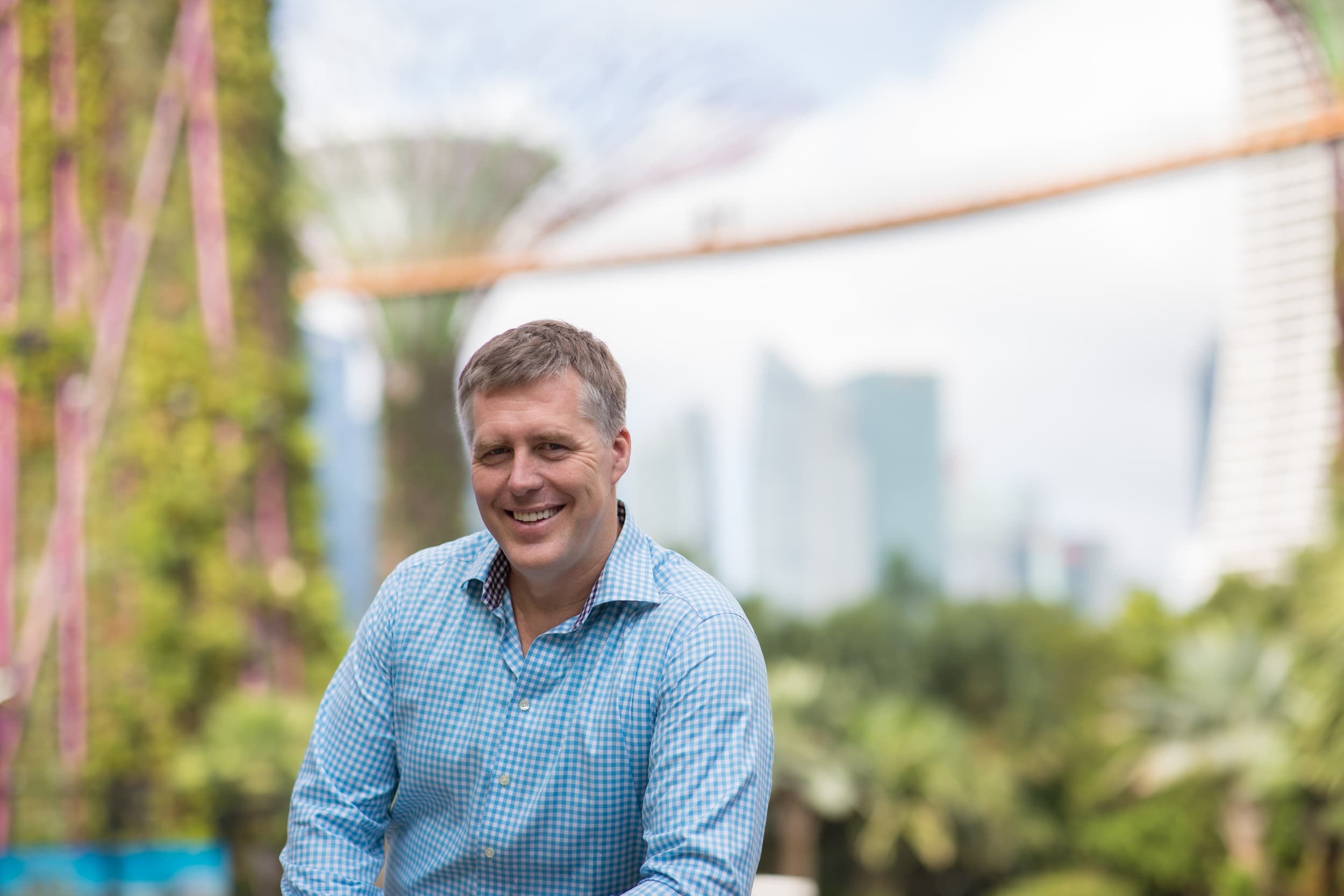
Brett is a four-time founder (Darra Tyres, Gladfish, EzyTrac, Anaboo) and the operator behind AIOS, Anaboo's AI Operating System. He writes from inside the build, installing AI in his own businesses first and reporting back what actually moves the numbers. Based between Singapore, the UK and Australia.