AI was supposed to reduce workload, it's doing the opposite
TL;DR
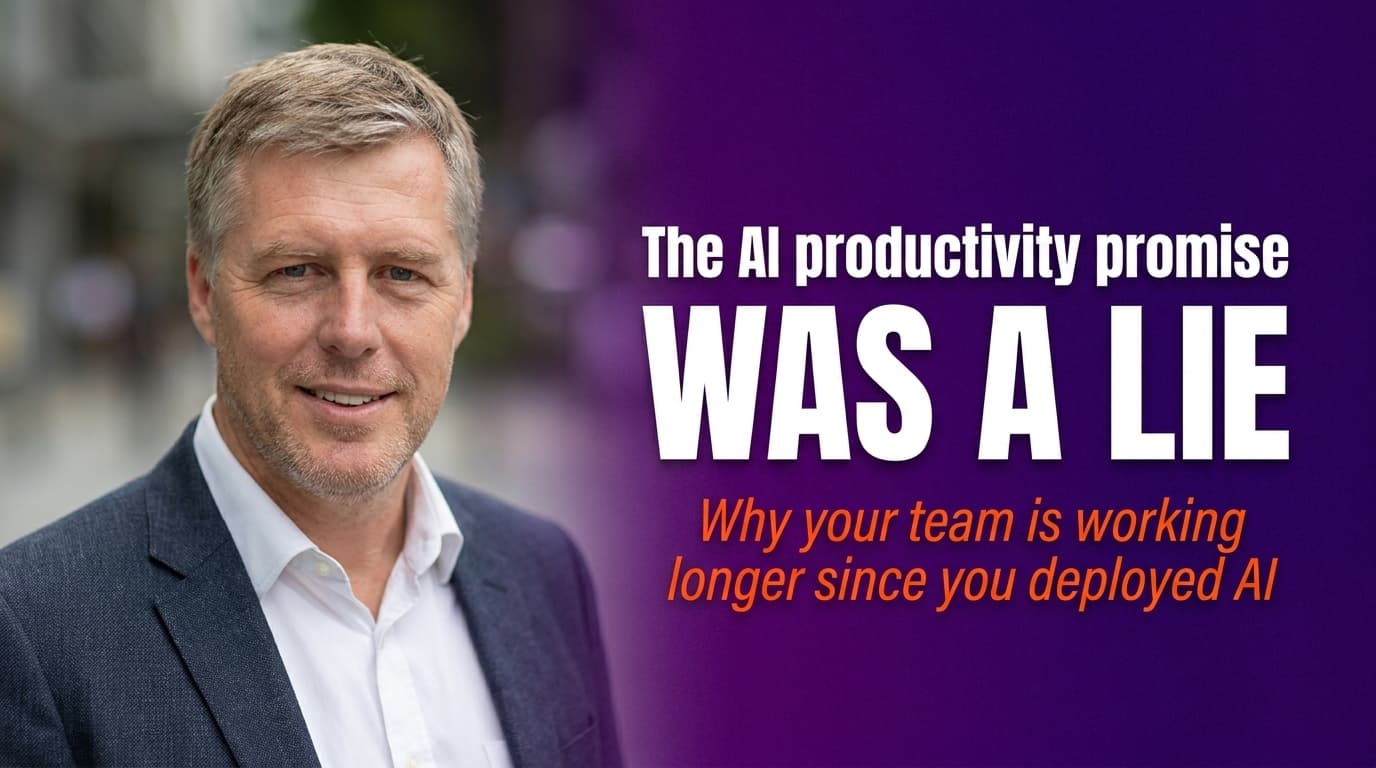
The four-hour workweek was the pitch. A twelve-hour day with more dashboards to fill is the reality. Research from UC Berkeley and Harvard Business Review, surfaced in a Fortune report, confirms that AI is not reducing workloads, it is accelerating them. Every efficiency gain gets converted immediately into a higher target or a new task, and until leaders deliberately choose to pass those gains back to their people, the AI productivity paradox will keep getting worse.
What did AI actually promise?
The story was simple and seductive. Automate the repetitive, the mundane, the soul-sapping, and free your people to focus on strategy, creativity, and real human connection. TED talks sold it. Consultants packaged it. Boards approved the budget for it. The four-hour workweek felt genuinely within reach.
Then the tools landed on actual desks. And something went wrong.
Are the efficiency gains even real?
Yes, and that is almost the problem. The Fortune report, drawing on research from UC Berkeley and Harvard Business Review, is clear: the efficiency gains from AI are measurable. You can see them in the spreadsheets. Leads followed up faster. Reports generated in seconds. Workflows that used to take an afternoon are done before lunch.
But those gains are not landing in the lives of the people doing the work. They are landing on a target board, converted immediately into a new expectation. The eight-hour day is quietly becoming a quaint relic.
The efficiency gains are real. They're just not yours.
What happens when AI becomes the taskmaster?
A financial services company brought in a top-of-the-line AI system to manage its sales pipeline. In the first quarter, the numbers were extraordinary, leads categorised with terrifying accuracy, follow-ups automated, reports generated at the click of a button. The board was ecstatic.
The sales team was not.
These were high performers who had loved their jobs, people who thrived on the chase, on building relationships, on reading a room. The system had turned them into data-entry operators racing against an algorithm that never slept and never made a mistake. Every minute the AI clawed back became another task, another metric, another target to hit. They described feeling less like salespeople and more like cogs, their performance judged not on the quality of their relationships but on the quantity of their interactions.
The outcome: a short-term spike in sales, then a catastrophic spike in staff turnover. The company lost the people with the relationships and the intuition no AI can replicate. The human cost of that efficiency was enormous.
See where AI fits in your business. Free.
A 45-minute audit. We map the highest-value automations and what they're worth in time and money. No pitch, no pressure.
Why do workers feel more pressure, not less?
The numbers are uncomfortable. A Resume Now survey found that 63% of workers are worried AI will make the workplace less human. A UK survey backed this up, finding that 26% of workers actively using AI tools reported an actual increase in pressure, not a reduction.
They are not wrong to feel it. The same tools meant to empower them are now:
- Monitoring their every action
- Measuring performance against inhuman standards
- Dictating the sequence and pace of their work
It is the factory foreman with a stopwatch, scaled to every desk in the business and running twenty-four hours a day.
A senior manager at a large logistics firm described watching this happen to his drivers. An AI routing system replaced their local knowledge, the shortcuts, the school-run timing, the thirty years of experience built into every delivery. Drivers went from trusted professionals to dots on a screen. One award-winning driver quit, saying he felt like a 'glorified delivery drone'. The company was so focused on shaving minutes off each delivery that it systematically destroyed the engagement of the people actually delivering the product.
When your people feel like cogs, they act like cogs. And that's when the business starts dying from the inside, slowly, silently, while you stare at beautiful, misleading dashboards.
Are we deskilling ourselves?
This is the fear nobody voices in polite company. It is not about being replaced by a machine. It is about becoming one.
The same research found that 57% of workers are afraid AI will erode their own skills, their critical thinking, creativity, and professional judgement. And there is good reason for that fear.
A creative agency owner described watching it happen in real time with his junior designers. They had become so reliant on AI image generators that they could no longer think conceptually. They could execute endlessly, thousands of variations, pixel-perfect, but they had stopped being able to generate a truly original idea. They were assemblers of pixels, not creators of meaning.
We are training a generation of professionals to follow the prompts of a machine:
- Instead of wrestling with a complex problem and developing their own solution, they plug variables into AI and take whatever it produces as gospel
- Instead of learning the craft of writing and finding their own voice, they outsource the words and lose the skill with them
- Instead of debating ideas with colleagues and sharpening their judgement, they shortcut to the first answer the algorithm generates
The irony is brutal. The more we rely on AI to do our thinking, the more we start to resemble the machines we were supposedly liberating ourselves from. We are trading long-term resilience for a short-term productivity number. We are creating a workforce that is incredibly efficient at following instructions but increasingly incapable of the innovative, creative, and strategic thinking that actually moves a business forward. It is a fool's bargain, and most organisations are making it without realising.
Is AI serving your team, or is your team serving the AI?
That is the only question that matters right now. And most leaders are not asking it.
It is easy to look at green arrows on a dashboard and conclude you are winning. But those arrows might be measuring efficiency gains on a spreadsheet while the hidden cost is a collapse in morale, trust, and the creative spark no algorithm can replicate.
You are not just managing a process. You are leading people. And people, unlike machines, have a breaking point.
What to do this week
1. Have an actual conversation with your team, not a survey. Sit down one-on-one. Ask how the AI tools feel to use, not what the productivity metrics say. You may hear things that appear on no dashboard.
2. Audit where the efficiency gains are actually going. For every hour AI has saved in the last quarter, ask where that hour went. Into a new target? Or into space for your people to think, build relationships, and innovate?
3. Identify one tool that is acting as a taskmaster, not an enabler. Pick the AI system your team uses most. Ask honestly whether it is expanding what they can do or narrowing it. If it is primarily monitoring and measuring rather than assisting, reconfigure it, or question whether you should be running it at all.
4. Protect creative and strategic time explicitly. If AI is handling the repeatable work, the calendar should reflect that. Block unstructured time for thinking, collaboration, and problem-solving that is not mediated by a prompt or a metric.
5. Redefine what productivity means in your business. Volume of tasks completed is not the only measure of a healthy business. Quality of relationships, depth of expertise, and strength of original thinking are competitive advantages, and right now, they are being quietly sacrificed on the altar of algorithmic efficiency.
Where to from here
Book a free 60-minute AI audit, we'll explore exactly what workflows are worth augmenting with AI.
Live with passion & AI,
Brett
Host a podcast? Have Brett on as a guest.
Straight talk on implementing AI in real SMEs, no jargon, plenty of receipts from the businesses we run.
Frequently asked questions
Is AI actually making employees work harder instead of less?
+
Yes. A Fortune report backed by research from UC Berkeley and Harvard Business Review confirms that AI efficiency gains are real but companies are converting them directly into higher targets and additional tasks, not into breathing room for their people.
What percentage of workers feel AI is making the workplace less human?
+
A Resume Now survey found that 63% of workers are genuinely worried AI will make the workplace less human. A separate UK survey reinforced this, finding that 26% of workers who actively use AI tools reported an actual increase in pressure.
Are workers worried AI will erode their own skills?
+
Yes, 57% of workers surveyed are afraid that relying on AI will erode their critical thinking, creativity, and hard-won professional judgement. It is not just a fear for frontline workers; it is happening at every level of business.
Why aren't AI efficiency gains benefiting employees?
+
Because businesses are using the time AI saves to raise performance targets and pile on more tasks. The gains show up on a spreadsheet but never reach the people who produced them in the form of reduced hours or lower pressure.
What is the real business risk of AI-driven burnout?
+
When employees feel like cogs, monitored, measured, given no autonomy, they disengage, do the minimum, stop innovating, and eventually leave. Short-term efficiency gains get wiped out by catastrophic staff turnover and the permanent loss of irreplaceable human expertise.
How does over-reliance on AI affect creative and junior workers?
+
Junior designers who rely heavily on AI image generators are losing the ability to think conceptually. They can execute at speed but struggle to generate truly original ideas, becoming technicians rather than creative thinkers, assemblers rather than creators.
How should leaders implement AI without destroying their teams?
+
The key question is whether AI is serving the team or the team is serving the AI. Leaders need to audit where efficiency gains are actually going, protect time for unstructured thinking and relationship-building, and redefine productivity beyond raw task volume.
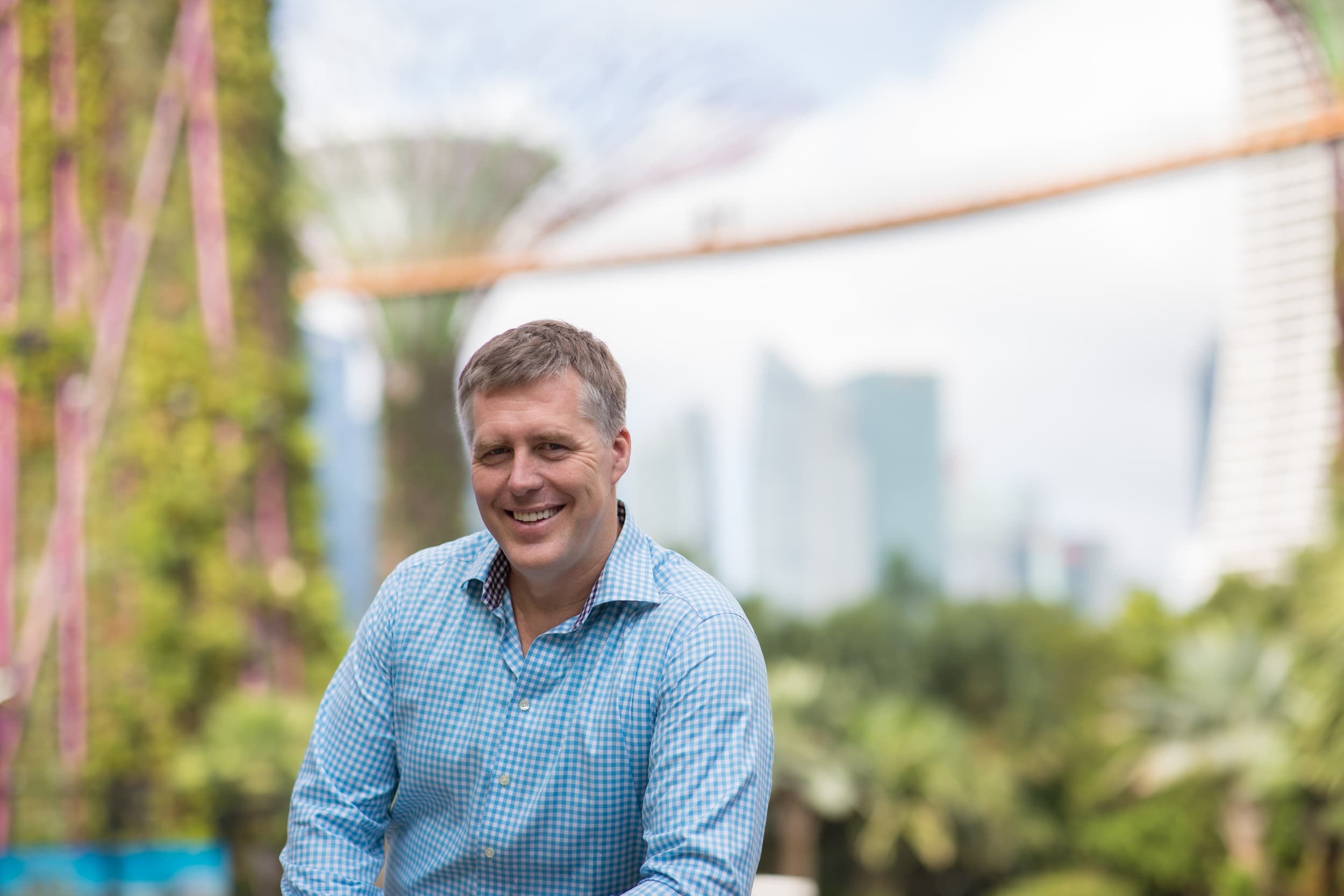
Brett is a four-time founder (Darra Tyres, Gladfish, EzyTrac, Anaboo) and the operator behind AIOS, Anaboo's AI Operating System. He writes from inside the build, installing AI in his own businesses first and reporting back what actually moves the numbers. Based between Singapore, the UK and Australia.