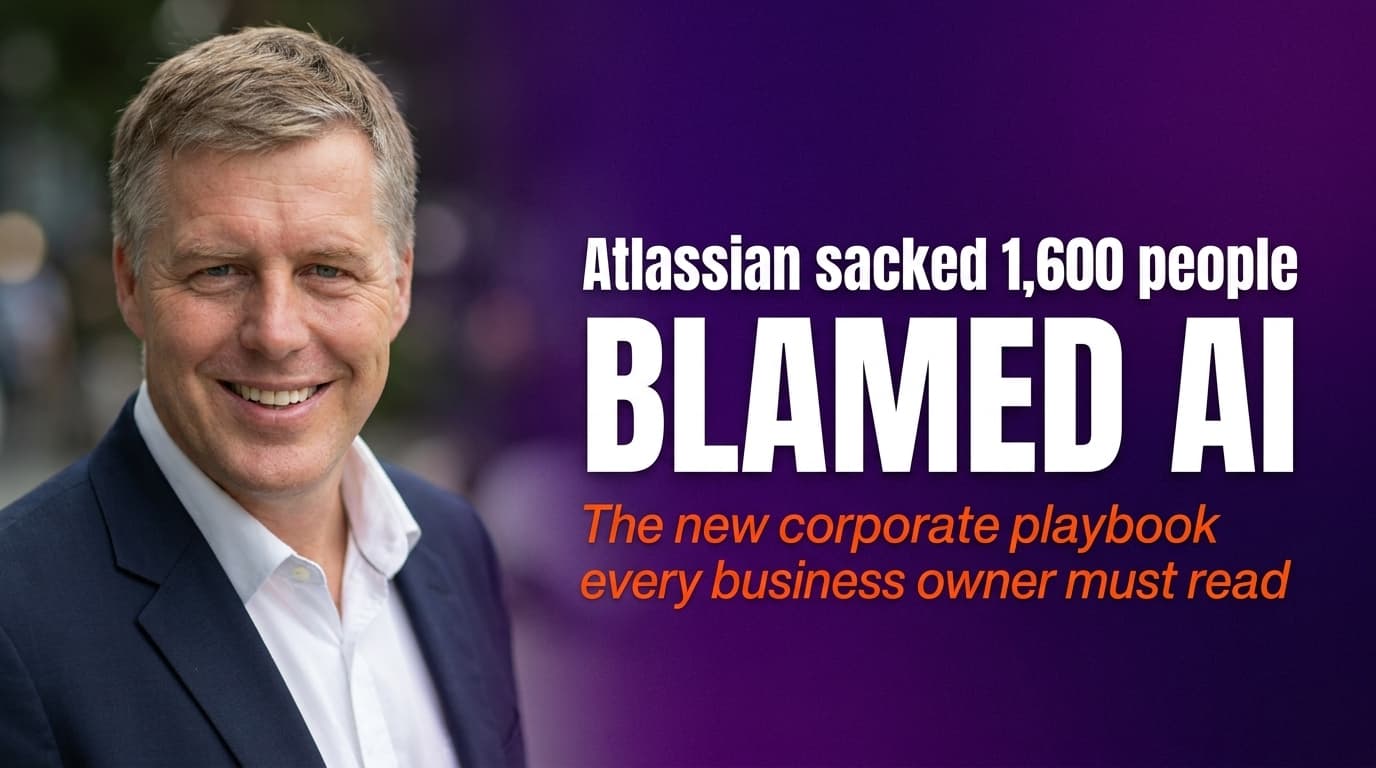
Atlassian sacked 1,600 people and blamed AI, what it really means
TL;DR
Atlassian fired 1,600 people and WiseTech fired 2,000, both CEOs blamed AI. This is a new corporate playbook: using AI as a sophisticated cover story for bog-standard cost-cutting. Meanwhile, the Lloyds Bank report found 87% of UK businesses are seeing productivity surges from AI, and 48% are reporting higher profits. The question for every business owner is which side of that story you're going to write.
What actually happened at Atlassian and WiseTech?
Atlassian sacked 1,600 people. WiseTech showed 2,000 of their team the door, a few weeks earlier. In both cases, the CEOs stood up and essentially said AI made us do it. Atlassian's Mike Cannon-Brookes was explicit: "It would be disingenuous to pretend AI doesn't change the mix of skills we need."
That sentence matters. This isn't a middle manager explaining away a budget cut. It's one of the most respected tech leaders in the world, on a global stage, explicitly linking mass redundancies to the rise of artificial intelligence. The playbook has been written, and you're going to see it used again and again, in every industry, in every corner of the globe.
Why is this different from previous tech layoffs?
For years, the unspoken rule of layoffs was to wrap them in corporate jargon, "restructuring for growth, " "optimising synergies, " "streamlining operations to enhance shareholder value." Linguistic gymnastics designed to avoid saying the simple, brutal truth: we're cutting costs to protect the bottom line.
Now they're saying the quiet part out loud. AI is the new excuse, and it's a dangerously powerful one because it sounds forward-thinking. It sounds strategic. It sounds like progress. It allows leaders to frame a deeply human and often painful decision as a cold, logical, inevitable step into the future. Firing people is no longer positioned as a failure of leadership or a sign of a struggling business, it's a bold move to embrace the next technological revolution.
What is AI-washing and why does every business owner need to understand it?
AI-washing is the act of using AI as a convenient, sophisticated-sounding excuse for what are, in reality, just bog-standard, brutal cost-cutting measures.
We've had greenwashing for years, companies spending more time and money marketing their green credentials than actually minimising their environmental impact. AI-washing is the defining corporate deception of this era.
Consider which sounds better to the stock market and the analysts: "We're firing 1,600 people to improve profit margins ahead of a potential economic downturn, " or "We're strategically realigning our workforce to capitalise on the transformative potential of artificial intelligence and position ourselves for the next decade of growth." One sounds like weakness. The other sounds visionary. It's corporate PR 101, and it's incredibly effective.
What does the Lloyds Bank data actually say about AI?
Here's where the contradiction completely unravels. While Atlassian and WiseTech are blaming AI for job cuts, the Lloyds Bank report, based on a survey of thousands of UK businesses, tells a completely different story:
- 87% of businesses surveyed are seeing significant productivity surges directly from AI
- 48% are reporting higher profits as a direct result
So how can AI simultaneously be a productivity engine and a job-destroying monster? It can, depending entirely on how leadership chooses to frame and deploy it. The technology isn't the variable. Leadership intent is.
See where AI fits in your business. Free.
A 45-minute audit. We map the highest-value automations and what they're worth in time and money. No pitch, no pressure.
How does this create a trust crisis inside your business?
Your team reads the news. They see the Atlassian headlines. They watch the stock price jump after the announcement. Then they walk into the office and hear you, the boss, talking excitedly about new AI tools to "drive efficiency."
The conclusion they draw is simple, logical, and terrifying: the gains aren't for them. The productivity boom isn't going to lead to bonuses, a four-day week, or investment in their development. It's going to fund the next round of cuts. The efficiency gains of today are simply the justification for the layoffs of tomorrow.
This contradiction is a cancer in your company culture. It breaks the social contract between employer and employee. Every conversation about AI becomes loaded with suspicion. Every new software rollout is viewed through a lens of fear. AI, a tool that should be an incredible co-pilot for your team, becomes the public face of the executioner.
What happens to your best people when fear takes hold?
Fear kills creativity. No one is going to suggest a more efficient way of working if they think it will make their own role redundant. It stifles collaboration, as teams and individuals become protective of their knowledge and their patch.
And your most talented people, the proactive, ambitious ones you need the most, will focus on just one thing: updating their CVs and getting out. Your star developer who pulls all-nighters to fix critical bugs. Your most dedicated salesperson who builds deep client relationships. Your operations manager who holds the entire business together. They are all asking the same profound question: "Do they have a plan for me in this new world, or am I just a line item on a spreadsheet, waiting to be optimised away by an algorithm?"
By embracing the Atlassian playbook, even implicitly, even unintentionally, you are willingly creating a revolving door for your top talent and handing them directly to your competitors.
What should you actually do instead?
The answer is not to shy away from AI. The Lloyds Bank data makes it undeniable: 87% productivity surges, 48% profit uplift. If you don't adopt AI, you will be left in the dust. But the how matters enormously.
The answer is radical, uncomfortable transparency. Get in front of your team now, before fear and suspicion take root, and communicate a crystal-clear vision for how AI will be used in your business. That vision cannot be about cutting heads. It has to be about augmenting your team: making them better, faster, and more valuable than ever before.
Use AI to handle the grunt work, the tedious data entry, the repetitive report generation, the mind-numbing admin, so your people can focus on the high-value, creative, strategic work that a machine can't touch. Use it to grow the pie: enter new markets, create new products, serve customers in ways you never could before. Not to re-slice the existing pie into fewer, larger pieces for the owners.
Invest in training. Invest in upskilling. Actively carve out new roles that leverage both human ingenuity and machine intelligence. Prove it with actions, not just words. The choice is yours: build a culture of fear and churn, or build a culture of trust and growth.
What to do this week
- Have the conversation now. Don't wait until your team reads another Atlassian headline and fills in the blanks themselves. Get in front of them with your actual AI vision before suspicion takes root.
- Audit where AI helps, not replaces. Map the repetitive, low-value tasks in your business, those are your AI targets. High-judgement, relationship-driven, creative work stays human.
- Kill the jargon. Say "we're using AI to free you up for higher-value work", not "leveraging technology to optimise operational efficiency." Specificity builds trust; vagueness breeds fear.
- Put upskilling on the calendar. Training sessions, workshops, or dedicated time to explore AI tools together. Skin in the game signals you're investing in your people, not replacing them.
- Anchor to the Lloyds data, not the headlines. 87% productivity gains. 48% profit uplift. That's the story your business should be writing, and it starts with the conversation you have this week.
Where to from here
Book a free 60-minute AI audit, we'll explore exactly what workflows are worth augmenting with AI.
Live with passion & AI,
Brett
Need an AI operator inside your team?
Place a Chief AI Officer, an AI Officer, or embed an Anaboo Forward Deployed Engineer for 3–6 months.
Frequently asked questions
Why did Atlassian say AI caused its layoffs?
+
Atlassian CEO Mike Cannon-Brookes stated it would be disingenuous to pretend AI doesn't change the mix of skills needed, framing the 1,600 redundancies as a strategic realignment rather than a straightforward cost-cutting exercise.
What is AI-washing?
+
AI-washing is using AI as a sophisticated-sounding excuse for what are, in reality, bog-standard cost-cutting measures. It lets companies frame workforce reductions as forward-thinking strategy rather than financial necessity, and it's highly effective with analysts and media.
What did the Lloyds Bank report find about AI and productivity?
+
The Lloyds Bank report, which surveyed thousands of UK businesses, found that 87% are seeing significant productivity surges directly from AI, and 48% are reporting higher profits as a direct result.
Did WiseTech also blame AI for its layoffs?
+
Yes. WiseTech announced the departure of 2,000 employees a few weeks before Atlassian's announcement, with its CEO also citing AI-driven changes to the business as a key factor in the decision.
How do AI layoff announcements affect employee trust inside other businesses?
+
When staff see AI linked to mass redundancies in the headlines, they interpret their own employer's AI rollout through the same lens, fearing that productivity gains will fund future job cuts rather than benefit the team. This fundamentally breaks the employer-employee social contract.
What should business owners do to avoid destroying company culture with AI?
+
The answer is radical transparency: communicate a clear vision for how AI will augment the team rather than replace it, invest in upskilling, and use AI to grow the business rather than simply cut headcount. Actions matter far more than words here.
Is AI actually destroying jobs or creating productivity gains?
+
Both narratives are true depending on how leadership chooses to deploy AI. The Lloyds Bank data shows 87% of UK businesses gaining productivity, but companies like Atlassian and WiseTech demonstrate that leadership can choose to use those gains to cut staff rather than invest in growth. The technology isn't the variable, leadership intent is.
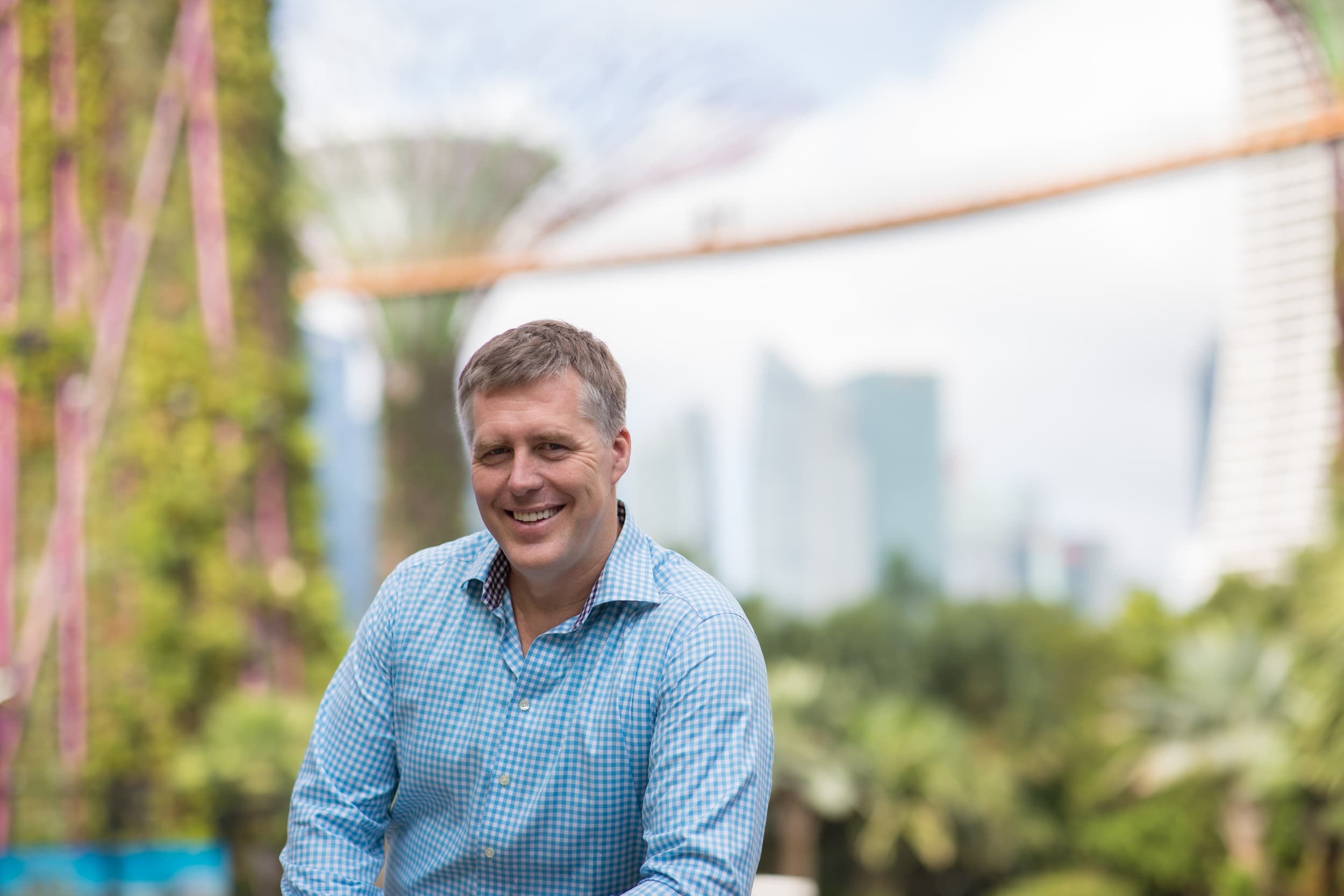
Brett is a four-time founder (Darra Tyres, Gladfish, EzyTrac, Anaboo) and the operator behind AIOS, Anaboo's AI Operating System. He writes from inside the build, installing AI in his own businesses first and reporting back what actually moves the numbers. Based between Singapore, the UK and Australia.