Australia scrapped its AI safety net while Singapore built a fortress
TL;DR
Australia scrapped its AI Advisory Body after 15 months and nearly $200,000 spent, replacing it with a vague 'lighter-touch' approach. In the same week, Singapore doubled down with a PM-chaired national AI council, 400% tax deductions for AI investment, and a dedicated AI Park. A Deloitte report already shows 84% of businesses globally planning to increase AI investment versus just 65% in Australia. The government is not coming to save you. The age of AI self-reliance has begun.
What just happened to Australia's AI Advisory Body?
After 15 months of planning and nearly $200,000 spent assembling a panel of experts, the Australian government has scrapped its much-anticipated AI Advisory Body. In its place: a 'lighter-touch' approach. That is the phrase. 'Lighter-touch.' No mandatory guardrails. No clear framework. No map.
This body was supposed to be the safety net: a structured framework to help Australian businesses navigate the single biggest technological shift of our lifetime. Instead, we got a policy reversal that tells every business owner in the country one thing loud and clear: you're on your own.
Why does scrapping the advisory body actually matter?
One expert summarised the stakes precisely: "I'm just nervous we are going to repeat the same mistakes [as with social media], possibly on steroids." That is not hyperbole. The hands-off approach to social media produced platforms that operate beyond effective control and left a trail of social and economic disruption. AI is a fundamentally more powerful technology, and we are lining up to make the same call.
This is not just a policy decision. It is a cultural statement. It declares that Australia is content to be a passive observer in the AI revolution rather than an active participant. A she'll-be-right attitude applied to a domain where that is the most dangerous possible stance.
"While businesses in other countries are being given a clear runway for take-off, Australian businesses are being left to build their own planes, with no instructions and no support."
The ethical considerations, the risks of job displacement, the competitive disadvantages: these are now your problems to solve, not the government's.
What is Singapore doing instead?
In the very same week Australia was tearing up its plans, Singapore was doubling down. The contrast is not subtle.
Singapore's approach is top-down, coordinated, and serious:
- National AI Council chaired by the Prime Minister: not a forgotten subcommittee, a core pillar of the national agenda
- 400% tax deduction for investments in AI
- A dedicated AI Park to create a hub of innovation and collaboration
- Parliamentary accountability: Members of Parliament demanding measurable outcomes on how AI will affect jobs, wages, and the broader economy
This is what a real national strategy looks like. Singapore understands that AI is not just another technology. It is the foundational layer of the future economy. The new electricity. The new internet. Just as nations once built power grids and fibre optic networks, Singapore is building the infrastructure for an AI-powered future, and they are not leaving success to chance.
See where AI fits in your business. Free.
A 45-minute audit. We map the highest-value automations and what they're worth in time and money. No pitch, no pressure.
How wide is the performance gap between Australia and the rest of the world?
Here is the critical context: this policy retreat is happening at precisely the moment Australia is already behind.
A Deloitte report set out the numbers plainly:
- 84% of businesses globally are planning to increase their AI investment
- 65% of Australian businesses are planning to do the same
That is not a minor variance. It is a structural lag. While competitors in Singapore, the UK, and the US are hitting the accelerator, Australian businesses are still debating whether to get in the car. The government's decision to abandon its advisory role sends a clear market signal: AI is something to deal with later. It is not.
Without a national strategy, Australian businesses in agriculture, mining, and healthcare (sectors where Australia should be a global leader) are competing against international rivals who are being actively propelled forward by their own governments. That is not a level playing field.
What does 'lighter-touch' actually mean day-to-day for your business?
Translate the policy language and it comes down to this: the ethical frameworks, the guardrails, the competitive guidance are now your responsibility to develop from scratch.
Businesses in other countries are being handed playbooks. Australian businesses have been told to write their own. That is a real cost. It demands time, expertise, and resources that most small and medium businesses simply do not have to spare. And every month of strategic drift is a month your competitors are extending their lead, supported by governments that have made AI a national priority.
Is this a crisis or an opportunity?
Honestly, it is both, and pretending otherwise helps nobody.
The absence of government direction is a genuine problem. But it also removes the temptation to wait for permission. The businesses that build real AI capability now, that develop their own internal frameworks and compound that learning over time, will have a substantial and durable competitive advantage over those that sit on their hands waiting for clarity that is not coming.
You cannot outsource this to a regulator who has just left the building. You have to build your own version of Singapore's fortress, within your own organisation.
What to do this week
The government has made its position clear. Here is where to start:
- Get educated. Understand what AI is actually doing in your industry right now. Not the hype. The real, operational use cases your competitors are already running.
- Audit your operations. Identify three to five areas where AI could save time, reduce cost, or deliver a better outcome for clients.
- Build internal capability. Even one person on your team who is genuinely invested in AI literacy changes your trajectory materially.
- Start experimenting. Pick one workflow, introduce an AI tool, measure the result. Iterate from there.
- Create your own framework. Document your principles for AI use: what is in scope, what is off limits, how you will handle data and ethical considerations.
You are your own AI advisory body now. That is the hand you have been dealt. The question is whether you play it.
Where to from here
Book a free 60-minute AI audit and we'll explore exactly what workflows are worth augmenting with AI.
Live with passion & AI,
Brett
Running an event? Put practical AI on your stage.
Keynotes and workshops that send business owners home with a plan they can use Monday morning. No hype.
Frequently asked questions
Why did Australia scrap its AI Advisory Body?
+
After 15 months of planning and nearly $200,000 spent assembling a panel of experts, the government chose a 'lighter-touch' approach to AI regulation. This effectively abandoned the mandatory guardrails framework that was in development, leaving businesses without a national strategy.
What is Singapore's National AI Council?
+
Singapore's National AI Council is chaired by the Prime Minister and sits as a core pillar of the national agenda. It is backed by concrete incentives including a 400% tax deduction for AI investments and a dedicated AI Park designed to foster innovation and collaboration.
How does Australia's AI investment rate compare to the global average?
+
According to a Deloitte report, 84% of businesses globally plan to increase AI investment compared to just 65% in Australia. That is a significant and widening gap that reflects a deeper strategic lag.
What does 'lighter-touch' AI regulation actually mean for Australian businesses?
+
It means Australian businesses must navigate AI adoption, ethical considerations, and job displacement risks without government guidance or a national framework. The responsibilities the advisory body was meant to shoulder now fall entirely on individual businesses.
How is Singapore holding its government accountable on AI?
+
Members of Parliament in Singapore are on their feet demanding measurable outcomes on how AI will affect jobs, wages, and the economy. That is a level of governmental accountability that stands in direct contrast to Australia's approach.
Which Australian industries are most exposed by the lack of a national AI strategy?
+
Agriculture, mining, and healthcare are sectors where Australia should be a global AI leader. Without a national strategy or supportive ecosystem, businesses in these industries are competing against international rivals who are being actively supported by their own governments.
What should Australian businesses do now the government has stepped back?
+
Start by auditing where AI can improve your operations, build internal AI literacy, and begin experimenting with specific workflows. You are effectively your own AI advisory body now. Waiting for government clarity that is not arriving is not a viable strategy.
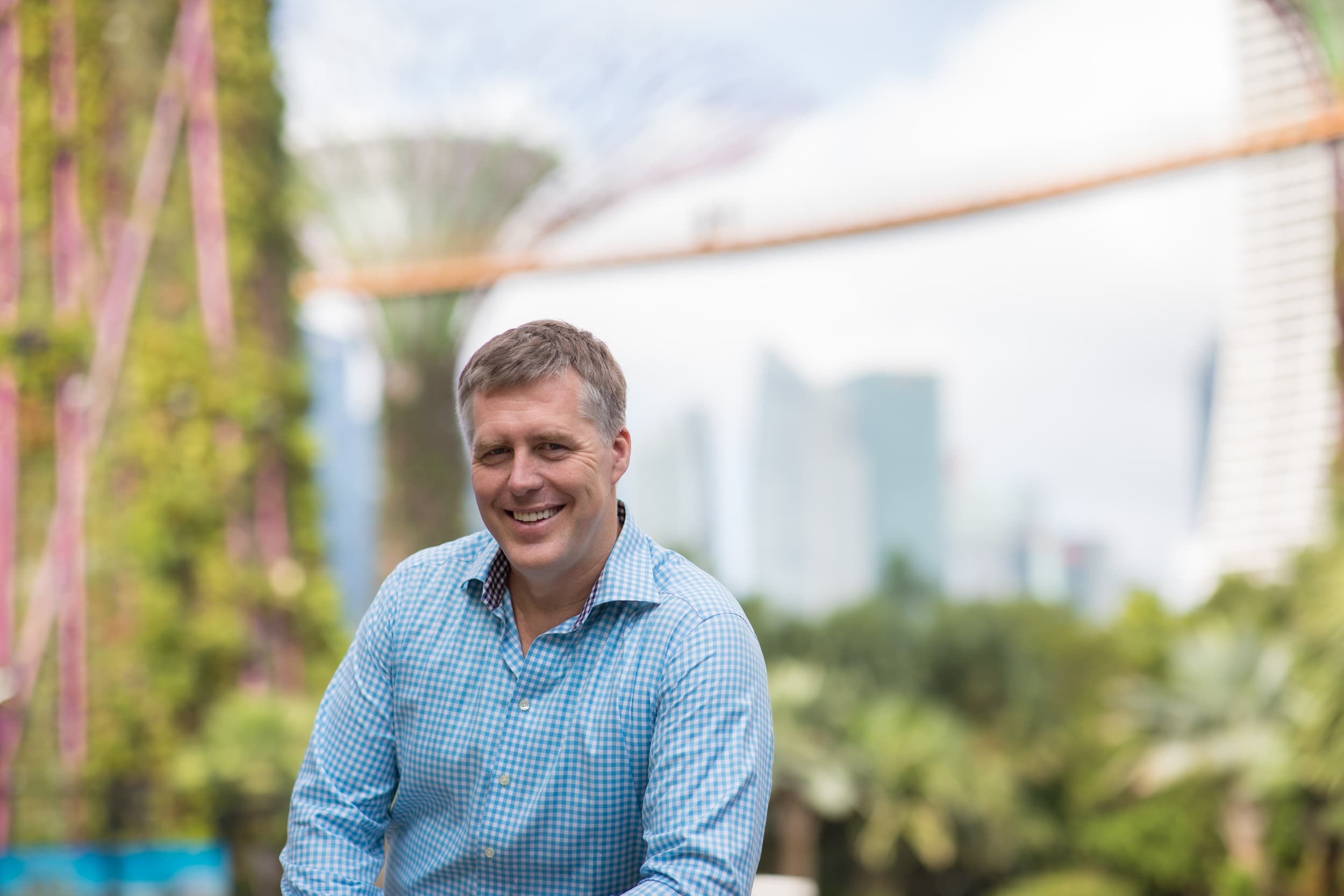
Brett is a four-time founder (Darra Tyres, Gladfish, EzyTrac, Anaboo) and the operator behind AIOS, Anaboo's AI Operating System. He writes from inside the build, installing AI in his own businesses first and reporting back what actually moves the numbers. Based between Singapore, the UK and Australia.