One AI Agent Isn't Enough: How a Team of Specialists Runs a Whole Process
TL;DR
A single AI agent is good at one job. A multi-agent system is several specialist agents working together, each doing its part of a process and handing the work to the next, the way a good team does. For an established business, that's how a whole job gets handled end to end without someone driving every step. The trick is to map one real process first, then let the agents take the routine stages while your people keep the judgement.
The problem with one all-knowing agent
Most people, when they first get excited about AI, want to build one super-agent that does everything. Reads the email, writes the proposal, books the meeting, updates the CRM, chases the invoice. One brain to rule them all.
It sounds efficient. In practice it's the opposite.
When you load a single agent with everything your business knows, it has to sift through all of it for every task. Ask it to write an invoice and it's wading past your marketing tone-of-voice guide to find your pricing. It makes assumptions. It fills gaps with general knowledge instead of yours. The bigger the pile of context, the more it guesses, and the more you pay for every word it reads whether it needed it or not.
You already solved this problem in your business, years ago. You didn't hire one person to do sales, accounts, ops and compliance. You hired specialists and gave each of them a lane. Multi-agent AI is the same idea, just built in software.
What a multi-agent system actually is
A multi-agent system is several AI agents that each handle one part of a process and pass the work between themselves to finish the whole thing.
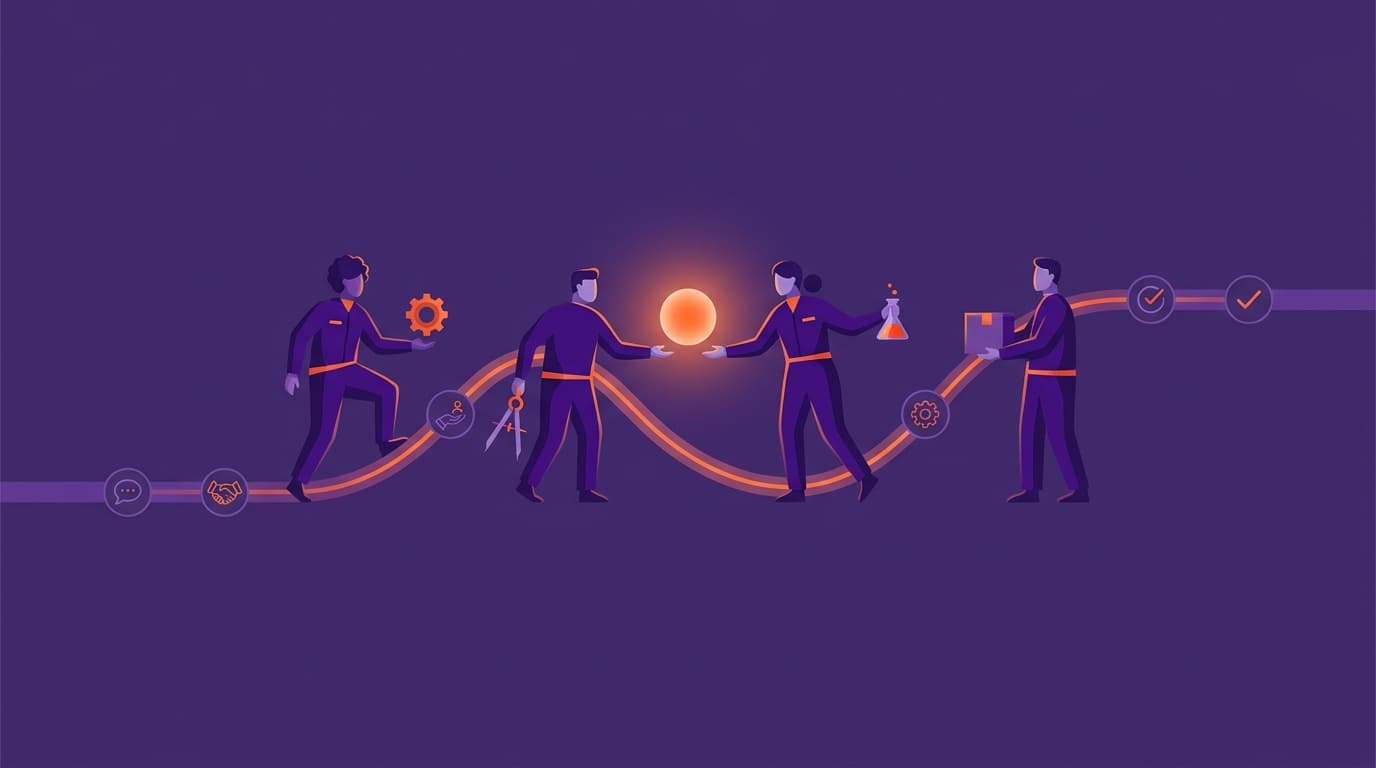
Think of a relay team rather than a single runner. Each runner is excellent over their leg, hands the baton cleanly, and the team covers a distance no one person could sprint. The handoff is the whole point. Each agent does its bit well because its bit is all it has to think about, then it passes the work on with everything the next agent needs.
The "agentic" part means these agents don't just answer questions. They act. They read data, make a decision, use a tool, check the result, and pass it along. String a few of those together, each one a specialist, and you've got a process that runs itself.
See where AI fits in your business. Free.
A 45-minute audit. We map the highest-value automations and what they're worth in time and money. No pitch, no pressure.
A real example: a new enquiry, handled end to end
Here's the kind of thing this does well. A new enquiry lands from your website. Watch it move:
- The research agent reads the enquiry, pulls what's available on the company, and qualifies the lead against your criteria, loading only the files it needs to qualify, nothing else.
- The sales agent picks up the qualified lead, checks your CRM for any prior contact, and drafts a personalised reply based on your real offer and your real pricing.
- The compliance agent reads the outgoing message for anything risky (a claim you can't make, a regulatory line you can't cross) before it ever leaves the building.
- The admin agent logs the whole interaction, updates the pipeline, and schedules the follow-up at the right time.
Four steps. Done in seconds. And here's the bit that matters: each agent only loaded what its stage needed. No noise, no wasted effort, no guessing anywhere in the chain. The enquiry that used to sit in someone's inbox until Tuesday gets a sharp, on-brand, compliant reply while it's still warm.
I see the shape of this everywhere in my own businesses. At Darra Tyres, the day is the same pattern repeating: enquiry, quote, follow-up, booking. At EzyTrac on the property side, it's notices, reminders and compliance dates that cannot be missed. None of it is hard. It's just relentless, and it's made of handoffs between people. That's exactly the shape a multi-agent system fits.
Why specialists beat one generalist
Two reasons, and they're the same reasons you build a team out of people.
Accuracy. A narrow agent with tight context gives you an answer that uses your actual pricing, your actual procedures, your actual tone. A broad agent gives you something plausible that you then have to rewrite. Specific beats general every time.
Cost and speed. Every agent that loads less runs faster and cheaper. Across hundreds of interactions a day, the difference between an agent that reads only what it needs and one that reads everything is the difference between a system that pays for itself and one that quietly bleeds money.
The generalist super-agent feels powerful in a demo. The team of specialists is what actually holds up when it's running your business at 6am on a Tuesday.
Does this replace my people?
No, and be wary of anyone who tells you it does. Used properly, a multi-agent system augments your team. It clears the repetitive handoffs between people so your staff spend more of their hours on the work only humans do well: the borderline pricing call, the upset client, the relationship that's worth ten transactions.
The businesses that get this right don't shrink their teams. They get far more out of the team they already have. Same people, less grind, more of the work that actually grows the place.
How the agents stay in their lane
A system like this is only safe because every agent runs inside rules you set.
Each agent has a defined scope, the sales agent drafts replies, it doesn't change your prices. And you decide where an agent can act on its own and where it has to stop and ask. Anything risky or irreversible, sending money, messaging a customer, publishing something, the agent prepares the work and waits for a human to approve. The low-risk internal stuff, like drafting and filing, it just gets on with. You set that line, and you move it outward as your trust grows.
That's what keeps a multi-agent system from becoming a runaway. It's a team with clear roles and a manager who signs off the important calls, you.
Where to start
Don't try to wire up your whole business at once. That's the mistake that ends in overwhelm and a half-finished project nobody trusts.
Pick one process you already understand well, handling a new enquiry is the classic, and map how it moves through your business today. Who touches it, in what order, and what each person needs to do their bit. That map is the blueprint. Then let agents take the routine stages while your people keep the judgement calls, with a human checking the output for the first couple of weeks. Once you trust that one process, add the next.
Small wins compound. The goal isn't a robot business. It's a business that runs a little more on its own each month, so you can step away from the desk without everything stalling.
If you'd like to see which of your processes a team of agents could quietly take off your plate, we run a free AI audit, a straight look at your business, no jargon and no pressure. We'll map one real process with you and show you where it fits.
Live with passion & AI,
Brett
Need an AI operator inside your team?
Place a Chief AI Officer, an AI Officer, or embed an Anaboo Forward Deployed Engineer for 3–6 months.
Frequently asked questions
What is a multi-agent AI system in simple terms?
+
It's several specialist AI agents working together, each handling one stage of a process and passing the work to the next, so a whole job gets done end to end instead of one agent trying to do everything.
Why not just use one powerful AI agent for everything?
+
One agent loaded with everything has to guess what's relevant for each task, which makes it slower, less accurate and more expensive. Specialists that each load only what they need produce sharper results. The same reason you hire a team, not one person to do every role.
Does a multi-agent system replace my staff?
+
No. It augments your team by handling the routine, multi-step admin between people, so your staff spend their time on judgement, relationships and the work only humans do well.
How do the agents hand work to each other safely?
+
Each agent has a defined scope and a clear handoff. Risky or irreversible steps (sending money, messaging a customer) pause for a human to approve, while low-risk internal steps run on their own.
Where should I start with multi-agent AI?
+
Start with one repetitive, multi-step process you already understand well, like handling a new enquiry. Map who does what today, then let agents take the routine stages while your people keep the judgement calls.

Brett is a four-time founder (Darra Tyres, Gladfish, EzyTrac, Anaboo) and the operator behind AIOS, Anaboo's AI Operating System. He writes from inside the build, installing AI in his own businesses first and reporting back what actually moves the numbers. Based between Singapore, the UK and Australia.