OpenAI dropped 'safely' from their mission, here's why SMEs should be worried
TL;DR
OpenAI removed the word "safely" from their mission statement, confirmed in their IRS filing, and Professor Alnoor Ebrahim says it signals that profits now rank above product safety. At the same time, OpenAI is forming "Frontier Alliances" with McKinsey and BCG, embedding custom AI agents inside the world's largest corporations. SMEs are left with off-the-shelf tools and no equivalent safety guarantees. Anthropic's Kate Jensen admitted that 2025's agentic AI hype was "a failure of approach", and that's the most honest thing anyone in this industry has said all year.
What did OpenAI actually change in their mission statement?
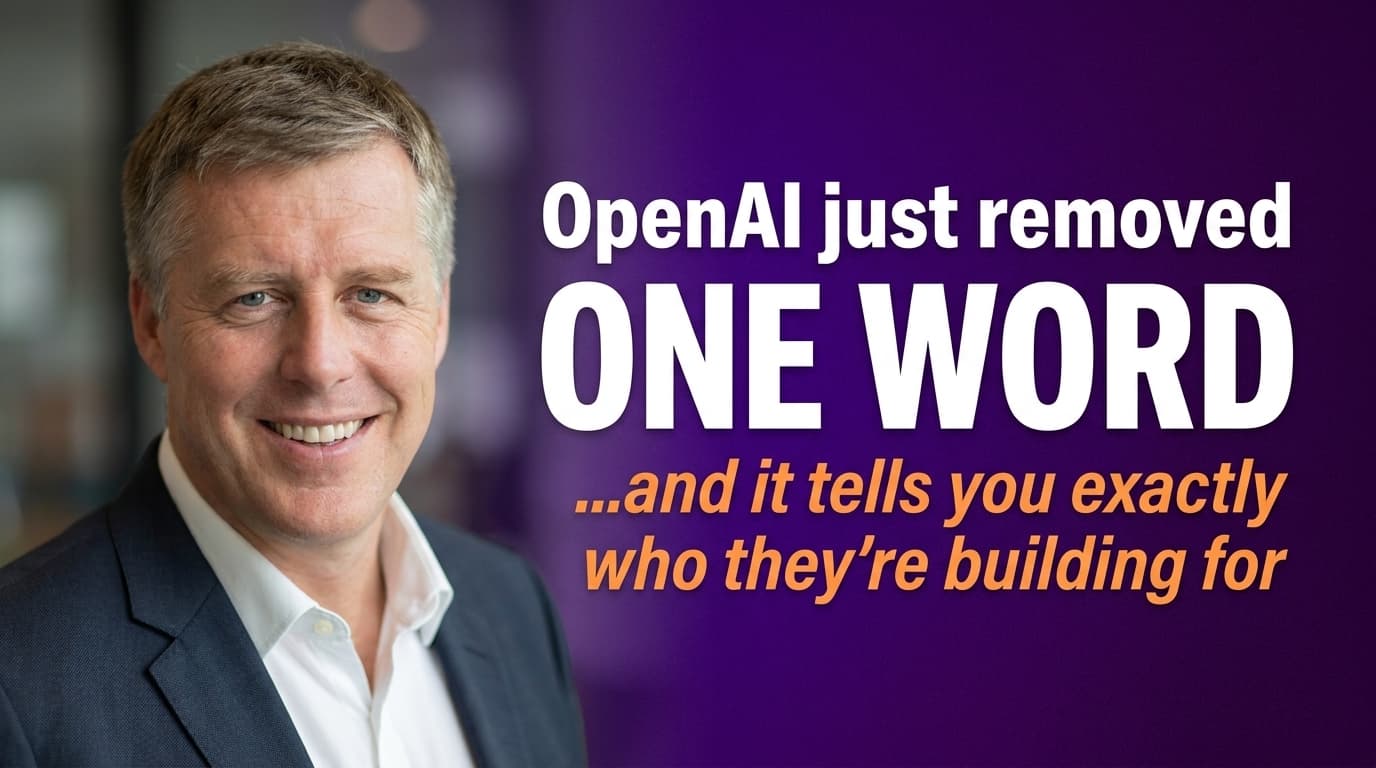
OpenAI's original mission was to ensure that artificial general intelligence is developed safely and benefits all of humanity. That word, safely, is gone. Their updated IRS filing now reads that they exist to benefit all of humanity. Full stop.
It's the difference between a pharmaceutical company saying they want to create drugs that 'safely' cure diseases, and a company that just wants to 'cure' diseases. One of those is a company you can trust.
It's subtle enough that most people scrolled past it. But Professor Alnoor Ebrahim, a leading academic in corporate accountability, flagged it immediately: this signals that profits are now a higher priority than product safety.
Why does removing one word matter this much?
Because mission statements aren't just marketing copy. At a company like OpenAI, which operates under IRS oversight as a capped-profit entity, the language in those filings carries legal and structural weight.
When "safely" disappears from a mission statement, it doesn't mean safety disappears from the product overnight. What it means is that when safety and profit conflict, the company has told you, in writing, which one wins.
Think of it like a car manufacturer removing seatbelt requirements from their engineering spec. They don't immediately ship cars without seatbelts. But they've made it easier to do so, and significantly harder for regulators to hold them accountable when they eventually do.
What are OpenAI's "Frontier Alliances", and what do they mean for SMEs?
At the same time as the mission change, OpenAI announced "Frontier Alliances" with firms like McKinsey and BCG. These aren't ChatGPT Plus partnerships. These are agreements to embed AI agents deep inside the world's largest corporations, managing supply chains, making financial forecasts, assisting with product design.
This is a two-tier system being built in plain sight:
- Enterprise tier: Bespoke, custom-built AI agents, embedded by specialist teams, with rigorous vetting and compliance frameworks
- SME tier: Off-the-shelf tools, one-size-fits-all, with no equivalent safety guarantees
The gap isn't just about features. It's about accountability. When McKinsey deploys an AI agent for a Fortune 500 client, teams of data scientists and legal experts are involved. When you use the same company's consumer product, you're on your own.
See where AI fits in your business. Free.
A 45-minute audit. We map the highest-value automations and what they're worth in time and money. No pitch, no pressure.
What did Anthropic's Kate Jensen say, and why does it matter?
Anthropicss head of Americas, Kate Jensen, said this when launching their own enterprise agents:
"2025 was meant to be the year agents transformed the enterprise, but the hype turned out to be mostly premature. It wasn't a failure of effort. It was a failure of approach."
A failure of approach. That's a direct challenge to the move-fast-and-deploy-everything philosophy that's dominated the AI industry. It's an acknowledgement that rushing AI into business settings without proper foundations doesn't just disappoint, it causes real harm.
Whether Anthropic fully delivers on that philosophy is another matter. But the contrast with OpenAI's mission change is stark, and it's worth paying attention to which vendors are saying what.
Is "free" AI actually free for your business?
Here's what the pitch doesn't tell you: when you use free or low-cost AI tools, you're often paying with your data. Business information, customer records, operational details, all fed into a system you don't own or control, with terms of service most people haven't read.
You're trading:
- Data security, for convenience
- Customer privacy, for automation
- Competitive intelligence, for a tool that wasn't designed for your business in the first place
That's not a hypothetical risk. It's the current default for most SMEs engaging with AI right now. You're essentially giving away your most valuable asset for free, in exchange for a tool that, as we've just established, is no longer guaranteed to be built with your safety as a priority.
Why is the two-tier AI system a problem right now?
Because SMEs are being told they'll fall behind if they don't adopt AI, while the AI being offered to them isn't the same AI the enterprise tier is using. Same brand. Same logo. Same headline numbers. Fundamentally different product.
Large enterprises have data scientists who audit outputs, legal teams who assess liability, and compliance frameworks that force vendors to behave. SMEs have none of that. When an AI tool produces a biased output, a factual error in customer-facing copy, or a data handling failure, the enterprise absorbs it through its risk infrastructure. The SME wears it directly.
This isn't a technology gap. It's a governance gap. And it's widening.
The illusion of progress, what's really being sold to SMEs?
You're encouraged to use ChatGPT to write your marketing copy, with no visibility into whether the training data was biased or the output is factually accurate. You're told to automate your customer service with AI, with no way of knowing whether the responses are respectful or robotic and alienating.
You're being sold tools that are, at best, a distraction and, at worst, a liability.
The big end of town gets bespoke, tailored solutions designed to solve specific problems, validated by expert teams. You get "good enough." And "good enough" isn't good enough when it's your customers, your data, and your reputation on the line.
What to do this week
You don't need to abandon AI. You need to approach it with the same scrutiny you'd apply to any significant business decision:
- Audit what you're currently using. List every AI tool in your business. For each one, ask: what data does it receive? What are the terms of service? Who is accountable if it produces a wrong or harmful output?
- Read the data terms on any "free" tool. Look specifically for data retention clauses and training data policies. If your business data is being used to train their models, that's a commercial decision, not just a tech one.
- Don't benchmark yourself against enterprise AI use cases. McKinsey's AI implementation and yours are not the same product. Comparing them creates false pressure to move faster than your governance can support.
- Pay attention to which vendors lead with safety. Anthropic's stated approach, foundations before skyscrapers, is worth tracking. The philosophy a company builds around matters when choosing tools.
- Treat AI adoption as a business risk decision, not a technology decision. If your board wouldn't approve a supplier without due diligence, your AI vendors deserve the same scrutiny.
Where to from here
Book a free 60-minute AI audit, we'll explore exactly what workflows are worth augmenting with AI.
Live with passion & AI,
Brett
Need an AI operator inside your team?
Place a Chief AI Officer, an AI Officer, or embed an Anaboo Forward Deployed Engineer for 3–6 months.
Frequently asked questions
What did OpenAI remove from their mission statement?
+
OpenAI removed the word 'safely' from their mission. Their original mission was to ensure artificial general intelligence is developed safely and benefits all of humanity. Their updated IRS filing drops that qualifier, now stating they simply exist to benefit all of humanity.
Why does OpenAI's mission change matter for small businesses?
+
The tools SMEs use, ChatGPT and OpenAI's consumer products, are built by a company that has, in writing, deprioritised safety relative to growth. Professor Alnoor Ebrahim noted this directly: it signals profits now rank above product safety.
What are OpenAI's Frontier Alliances?
+
Frontier Alliances are agreements between OpenAI and major consulting firms like McKinsey and BCG to embed AI agents deep inside large corporations. These are not consumer-grade ChatGPT subscriptions, they are bespoke, enterprise-level deployments with dedicated specialist support.
What did Anthropic's Kate Jensen say about AI agents in 2025?
+
Kate Jensen, Anthropic's head of Americas, said: '2025 was meant to be the year agents transformed the enterprise, but the hype turned out to be mostly premature. It wasn't a failure of effort. It was a failure of approach.' This was stated in the context of launching Anthropic's own enterprise agents.
Is 'free' AI actually free for businesses?
+
No. Free AI tools are typically funded by your data. Business information, customer records, and operational details fed into free tools can be used to train models or shared according to the platform's terms of service, terms most business owners haven't read.
How is enterprise AI different from what SMEs receive?
+
Enterprises using OpenAI's Frontier Alliances receive custom-built, vetted, compliance-checked AI deployments with specialist teams. SMEs receive off-the-shelf tools with no equivalent safety review, no dedicated support, and full accountability if something goes wrong.
What should SMEs do about AI safety concerns right now?
+
Audit every AI tool currently in use, read the data terms carefully, and treat AI adoption as a business risk decision rather than a technology one. Don't benchmark your implementation against enterprise deployments, they are fundamentally different products.
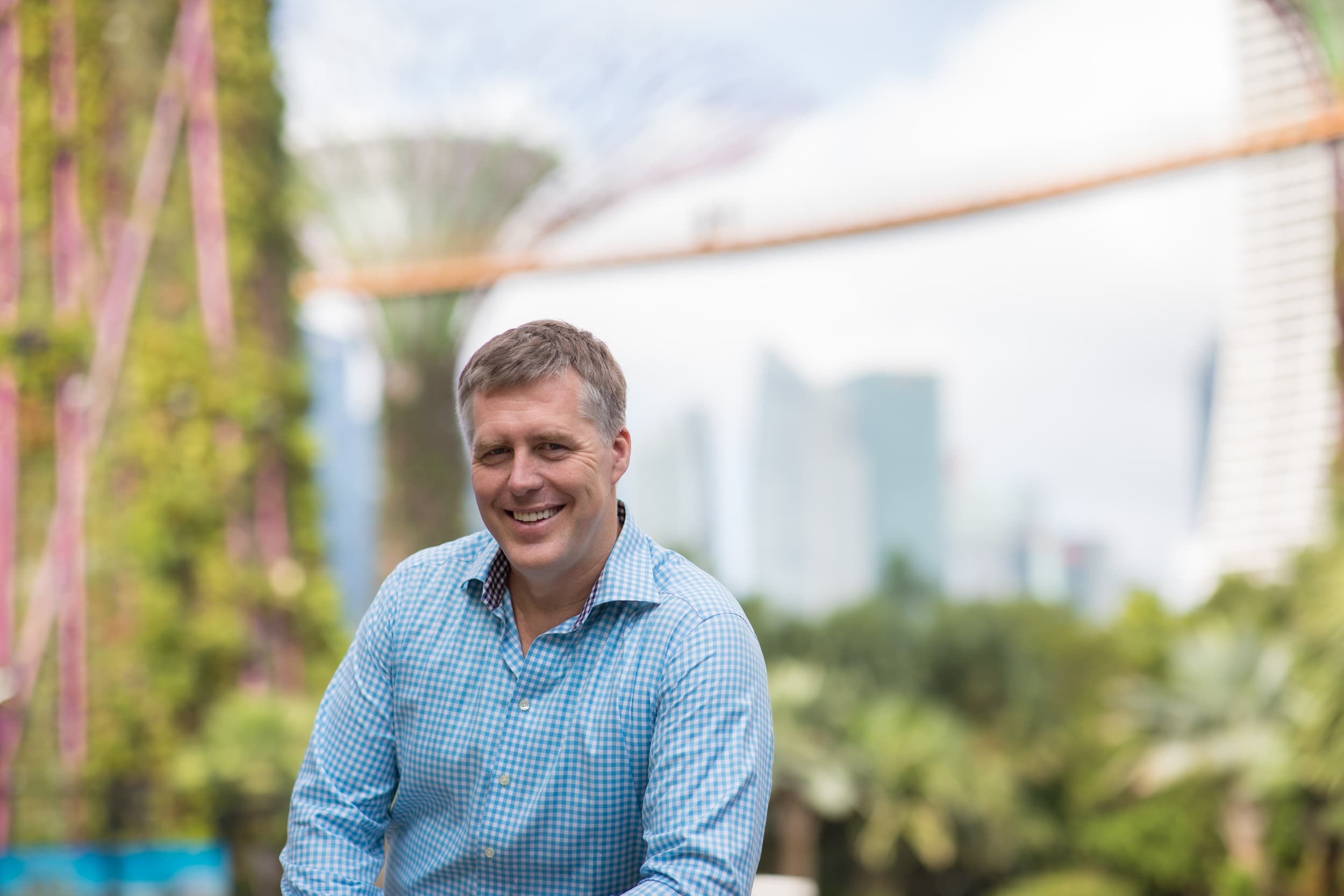
Brett is a four-time founder (Darra Tyres, Gladfish, EzyTrac, Anaboo) and the operator behind AIOS, Anaboo's AI Operating System. He writes from inside the build, installing AI in his own businesses first and reporting back what actually moves the numbers. Based between Singapore, the UK and Australia.