Singapore's S$5 billion AI bet: what UK and Australian businesses must do now
TL;DR
Singapore has committed S$5 billion in private capital to AI data centres, created a National AI Council chaired by the Prime Minister, and launched hands-on AI support for SMEs, all simultaneously. The UK has encouraging adoption numbers but its major new data centre won't break ground until 2027. Australia's private sector is in survival mode while its government publishes frameworks. Business owners in both countries cannot wait for national leadership that isn't coming. They need to build their own Singapore-style strategy inside their own company, right now.
What did Singapore actually commit to AI infrastructure?
Bridge Data Centres, backed by Bain Capital, has committed up to S$5 billion to build AI-ready data centres in Singapore. This is not a government handout. This is hard-nosed private capital making a massive, calculated bet on Singapore as the AI hub for the entire Asia-Pacific region. To power these facilities, Singapore is constructing a floating hydrogen power plant, not a pilot, not a feasibility study, an actual floating power plant built specifically to ensure the data centres have the capacity they need before it becomes a bottleneck.
That last detail matters. Most governments and businesses react to infrastructure constraints after they appear. Singapore is solving tomorrow's power problem today. That is what proactive leadership looks like at a national scale.
Is Singapore's investment just money, or is there a real strategy behind it?
The investment doesn't exist in isolation. Singapore has created a new National AI Council chaired by the Prime Minister. That single fact sends an unambiguous signal: AI is not a tech committee side project, it is a top-of-cabinet national priority. Alongside this, the government launched a "Champions of AI" programme specifically targeting SMEs, providing practical, hands-on support to help smaller businesses integrate AI, actively preventing the creation of a two-speed economy where only large enterprises benefit.
They also merged their workforce and skills agencies into a single, AI-ready body to align talent supply with the jobs AI will actually create. Education, workforce, infrastructure, and industrial policy are all pointed at the same objective.
Singapore is treating the AI revolution like a national mission. There is no political squabbling or bureaucratic inertia. There is only a singular focus on a single goal.
This is a masterclass in national strategy. And it should be a wake-up call for every other developed nation.
How does the UK compare to Singapore on AI?
The UK data tells two different stories depending on how deep you look. On the surface, a Lloyds report found that 87 per cent of businesses using AI are seeing productivity gains, a real and meaningful result. That is the headline.
Beneath it, the picture is muddier. A separate study found that 51 per cent of hospitality businesses are held back by data privacy and security fears. The infrastructure gap is starker still:
- A £7.5 billion data centre has been approved in Lincolnshire
- Construction will not start until 2027
- Singapore is building now
In AI timelines, three years is not a delay, it is an era. By the time that Lincolnshire data centre comes online, Singapore will have established market position, trained talent pools, and a compounding infrastructure advantage. The UK is moving, but it feels slow, cautious, and fragmented. Pockets of excellence, no unified national charge. The difference between a decisive march and a hesitant shuffle.
See where AI fits in your business. Free.
A 45-minute audit. We map the highest-value automations and what they're worth in time and money. No pitch, no pressure.
What is Australia actually doing about AI?
Australia's government is producing frameworks, discussion papers, and ethical guidelines. Well-intentioned, no doubt. Meanwhile, the private sector is not waiting.
Atlassian and WiseTech, two of Australia's most significant tech success stories, are already making large-scale pivots around AI, including significant workforce restructuring. They can see the writing on the wall. The problem is not the private sector's ambition. The problem is the complete absence of a bridge between government and business during this transition. There is no cohesive national strategy, no safety net for displaced workers, and no clear roadmap for the businesses trying to adapt.
The government is drawing maps. The private sector is patching holes in the hull. It is every company for itself, a brutal and inefficient way to navigate a technological revolution.
Why does Singapore's strategy matter to businesses in Manchester or Melbourne?
Because competition is global, whether you see it that way or not. The software you use, the supply chains you rely on, the talent you hire, it is all part of a global ecosystem. Your competitors in Singapore are being handed world-class AI infrastructure, a government-backed roadmap, and a national culture of ambition.
You are being handed a mixed bag of encouraging reports, alarming layoff announcements, and a government that is either too slow or too distracted to lead. That gap compounds every month. The businesses that treat AI as a future consideration rather than a current imperative are the ones that will find themselves competing on Singapore's terms, not setting their own.
What is the real cost of moving slowly?
The Lincolnshire data centre is the clearest illustration. Approved today, operational sometime after 2027. By then, Singapore will have:
- Operational, scaled AI infrastructure
- A trained and credentialled AI workforce
- Established relationships with the major tech firms that co-locate with AI infrastructure
- A three-year head start compounding into market position
The cost of waiting is not just inefficiency. It is ceding the race before it is run. Slow, cautious, and fragmented is not a strategy. It is drift dressed up as prudence.
What should a business owner do when their government won't lead?
Stop waiting for a national strategy. Build your own.
You have to create your own Singapore-style strategy for your own business. You have to be your own National AI Council.
That means investing in the right infrastructure, cloud services or in-house capabilities, depending on your scale. It means training your people now, not after a government skills programme materialises. And most importantly, it means establishing a clear, top-down vision for how AI will be used to win, not just to reduce costs or pass a board-level review, but to actually out-compete. Singapore's ambition is national. Yours needs to be organisational.
Ask yourself: what is my S$5 billion bet? What is the one bold move, made this quarter, that changes my competitive position in twelve months?
What to do this week
- Audit your current AI use. What tools are already live in your business? What percentage of recurring tasks are partially or fully automated? If you do not know the answer, finding it is your first task.
- Name your bottleneck. Is the blocker infrastructure, skills, or leadership buy-in? Each has a different first move. Do not try to solve all three at once.
- Set a 90-day AI target. Not a vague goal to "explore AI", a specific, measurable outcome. One workflow automated. One role upskilled. One process cut in half.
- Ask the Singapore question. What is your moonshot? Not the initiative that improves efficiency by 10 per cent, the bold move that reshapes how you compete.
- Train your people before the gap opens. Singapore merged its workforce agencies to prevent a skills shortage from becoming a ceiling on growth. Do not wait for the ceiling to appear. Start closing the skills gap inside your organisation now.
Where to from here
Book a free 60-minute AI audit, we'll explore exactly what workflows are worth augmenting with AI.
Live with passion & AI,
Brett
Running an event? Put practical AI on your stage.
Keynotes and workshops that send business owners home with a plan they can use Monday morning. No hype.
Frequently asked questions
How much is Singapore investing in AI infrastructure?
+
Bridge Data Centres, backed by Bain Capital, has committed up to S$5 billion to build AI-ready data centres in Singapore. This is private-sector capital, not a government subsidy, sophisticated money making a calculated long-term bet on Singapore as the region's AI hub.
What is Singapore's National AI Council?
+
The National AI Council is a newly created body chaired by Singapore's Prime Minister. Its existence signals that AI is a top-of-cabinet national priority, not a technology committee side project, and it drives the coordinated whole-of-economy strategy behind the infrastructure investment.
What is Singapore's Champions of AI programme?
+
The Champions of AI programme is a government initiative specifically designed to bring SMEs into the AI transition. Rather than letting smaller businesses fall behind the large players, the programme provides practical, hands-on support to help businesses of all sizes integrate AI into their operations.
How does the UK compare to Singapore on AI investment and adoption?
+
A Lloyds report found 87 per cent of UK businesses using AI are seeing productivity gains, which is encouraging. However, 51 per cent of hospitality businesses cite data privacy fears as a barrier. The infrastructure gap is starker: a £7.5 billion data centre has been approved in Lincolnshire but construction won't start until 2027, three years after Singapore is already building.
What are Australian companies like Atlassian and WiseTech doing about AI?
+
Atlassian and WiseTech are already making large-scale pivots around AI, including significant workforce restructuring. They are not waiting for government guidance, they can see that businesses that fail to adapt will not survive. The problem is there is no cohesive national strategy bridging government and the private sector during this transition.
Why does Singapore's AI strategy affect businesses in the UK and Australia?
+
Competition is global whether you see it that way or not. The software you use, the supply chains you rely on, and the talent you hire are all part of a global ecosystem. Competitors in Singapore are being handed world-class infrastructure, a government-backed roadmap, and a national culture of ambition, a compounding advantage that grows every month you delay.
What should a business owner do if their government isn't leading on AI?
+
Stop waiting. Invest in the right infrastructure, cloud or in-house. Train your people now rather than waiting for a government skills programme. Most importantly, establish a clear, top-down vision from leadership for how AI will be used to compete and win, not just to cut costs. You have to be your own National AI Council.
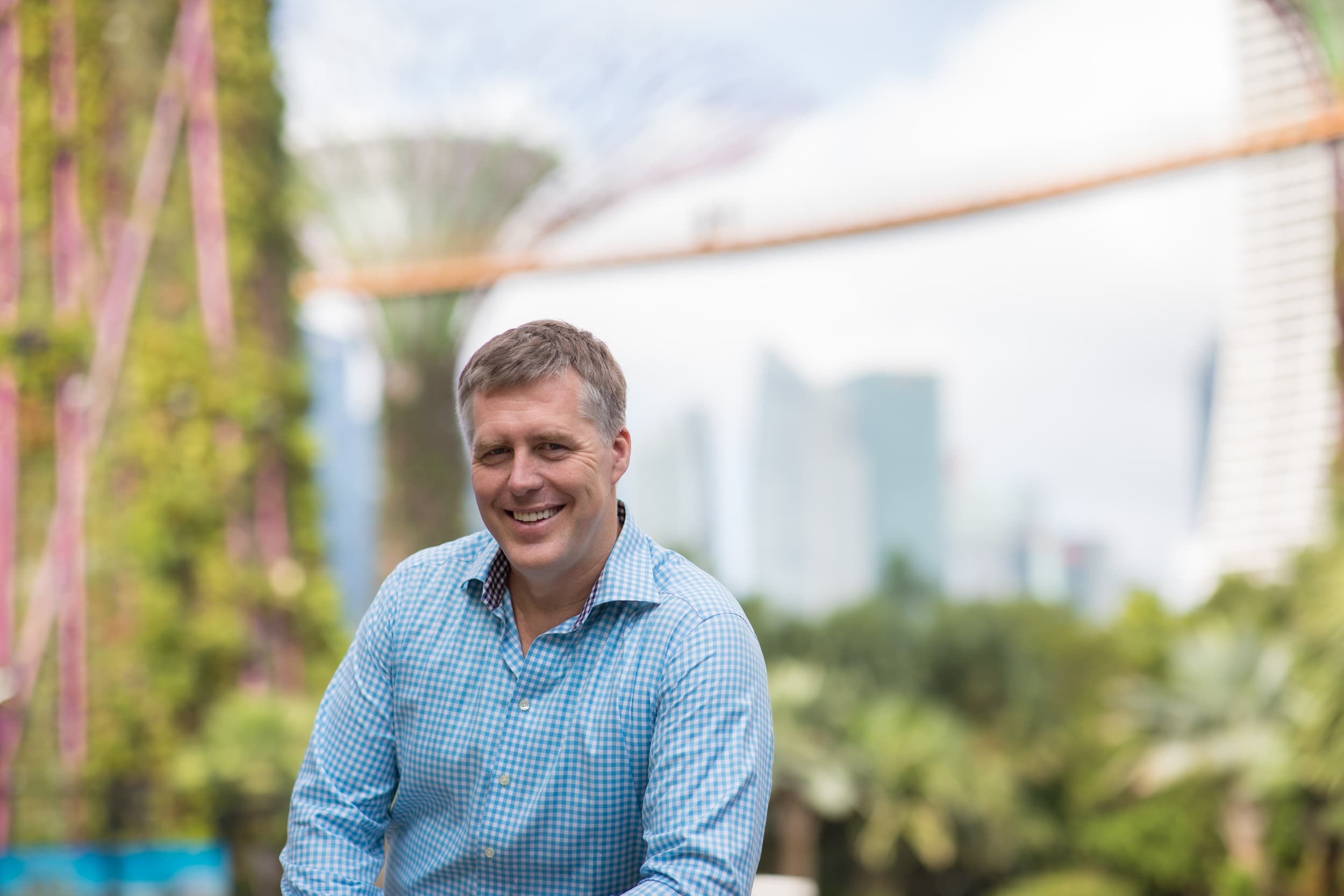
Brett is a four-time founder (Darra Tyres, Gladfish, EzyTrac, Anaboo) and the operator behind AIOS, Anaboo's AI Operating System. He writes from inside the build, installing AI in his own businesses first and reporting back what actually moves the numbers. Based between Singapore, the UK and Australia.