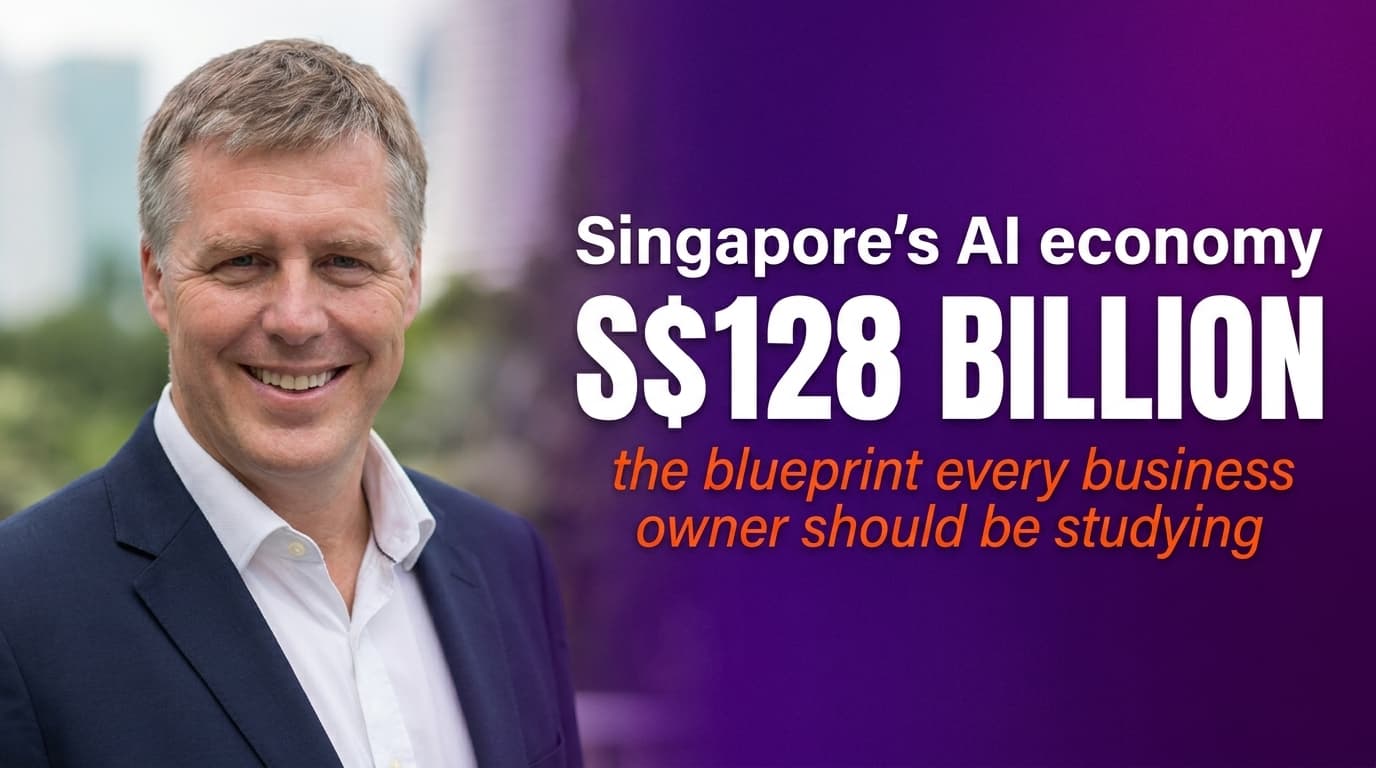
Singapore's S$128 billion digital economy is the AI blueprint you need
TL;DR
Singapore's digital economy has hit S$128 billion, built on deliberate government strategy, AI investment, and semiconductors, not luck. The government has backed this with S$28 billion in RIE 2025 funding to lock in the country's position as the world's leading Trusted AI hub. For SME owners still debating whether AI is worth the investment, this is your answer: it works, the numbers are in, and the blueprint is sitting right there to study.
Why Singapore's digital economy should be on your radar
Singapore isn't a large country. It has no natural resources to speak of. What it has is deliberate, long-term strategic thinking, and right now, that thinking has produced a digital economy worth S$128 billion.
That figure didn't happen by accident. AI and semiconductors were explicitly identified as the primary growth engines. The government then engineered the conditions for those engines to run at full speed. That's the part most business owners miss when they read the headline number.
What is RIE 2025 and why does the S$28 billion matter?
RIE 2025, Singapore's Research, Innovation and Enterprise plan, is the mechanism behind the growth. S$28 billion has been allocated with a clear mandate: keep Singapore at the frontier of Trusted AI and high-tech manufacturing.
For businesses, this creates something genuinely valuable:
- A constant pipeline of AI research and skilled professionals
- Government-backed funding that de-risks private AI investment
- A national framework that attracts global tech partners and customers
- Demand for AI-enabled services that did not exist five years ago
This isn't government spending disappearing into bureaucracy. It's an ecosystem being deliberately constructed, and ecosystems create commercial opportunities.
What does 'Trusted AI' actually mean for a business owner?
Singapore's emphasis on Trusted AI is one of the most strategically intelligent moves in the plan, and it's the one least discussed outside of policy circles.
Trusted AI isn't just about technology, it's about building an ethical and reliable AI ecosystem that fosters greater confidence and adoption.
As AI becomes more pervasive, the businesses that win won't just be the fastest adopters. They'll be the ones customers and partners feel safe working with. An ethical, transparent AI framework isn't a constraint on growth, it's a competitive differentiator. Singapore understood this early. Most Western businesses still haven't.
The AI Divide is real, and it's widening
Here's the uncomfortable truth. While you're weighing up whether to act, other businesses are already operating inside ecosystems designed for AI success. They're accessing:
- Research institutions and talent pipelines funded by government mandates
- Grant programmes that reduce the effective cost of AI adoption
- Partner networks built specifically to accelerate AI deployment
- A Trusted AI framework that gives their customers confidence
The AI Divide isn't a future problem. It's happening now. Every quarter you delay strategic engagement with AI is a quarter your better-positioned competitors spend compounding their advantage.
See where AI fits in your business. Free.
A 45-minute audit. We map the highest-value automations and what they're worth in time and money. No pitch, no pressure.
How do you actually tap into an AI ecosystem?
You don't need to relocate to Singapore. The value is in applying the model.
1. Map the ecosystem you're already in. Whether you're in the UK, Australia, or elsewhere, identify the government initiatives, funding programmes, and AI hubs operating in your jurisdiction. Singapore's RIE model has direct equivalents in most developed economies. Many business owners simply haven't looked for them.
2. Find your entry point, not your exit from your niche. You don't need to pivot your entire business. Ask where AI-driven demand intersects with what you already do well. Can you service companies inside these ecosystems? Can you integrate AI into your existing offer to make it more competitive?
3. Use government funding to de-risk investment. Grants, tax incentives, and co-funding programmes exist precisely because governments want businesses to adopt AI without gambling their operating capital. This is the closest thing to free money for AI transformation that exists.
4. Build partnerships before you need them. Tech companies, research institutions, and AI consultancies inside established ecosystems can compress your learning curve significantly. Collaboration is faster and cheaper than building internal capability from scratch.
5. Make your team AI-literate now. Not AI-expert. AI-literate. Your people need to understand how to work alongside AI tools, adapt to AI-driven workflows, and identify where automation creates leverage. This is a training investment, not a recruitment one.
What Singapore proves about AI-driven growth
Three things are now beyond reasonable debate:
- AI-driven economic growth is real and measurable. S$128 billion is not a projection. It is a current valuation backed by identifiable investment and policy decisions.
- Government support changes the risk profile entirely. S$28 billion in structured funding means the cost of AI adoption for businesses inside that ecosystem is significantly lower than for those operating in isolation.
- Ethical AI frameworks build commercial trust. The Trusted AI focus is not idealism, it's a strategy to accelerate adoption by reducing buyer hesitation at the market level.
For SME owners, the lesson is this: strategic AI adoption inside a well-structured ecosystem produces compounding returns. The businesses getting those returns aren't all large enterprises. They're businesses that decided to engage early and systematically.
What to do this week
- Search for AI grants and funding programmes in your country. Most developed governments have active programmes. Set aside two hours to find what applies to your industry and business size.
- Identify one AI tool your team could start using this month. Not a project. One tool, one workflow, one measurable improvement.
- Map your competitive landscape for AI adoption. Find out what your two or three closest competitors are doing with AI. If they're ahead, you need to know by how much and in which areas.
- Read your government's AI strategy document. The UK, Australia, Singapore, and most OECD nations have published national AI strategies. They tell you exactly where funding and support will flow over the next three to five years, and where the commercial opportunities sit.
- Start the internal conversation about Trusted AI. Before you deploy anything, align your team on ethical principles, data governance, and transparency. This protects you legally and commercially, and it's far easier to build in from the start than retrofit later.
Where to from here
Book a free 60-minute AI audit, we'll explore exactly what workflows are worth augmenting with AI.
Live with passion & AI,
Brett
Host a podcast? Have Brett on as a guest.
Straight talk on implementing AI in real SMEs, no jargon, plenty of receipts from the businesses we run.
Frequently asked questions
What is Singapore's digital economy worth?
+
Singapore's digital economy has reached a valuation of S$128 billion, driven primarily by AI and semiconductors as the core growth engines.
What is RIE 2025 and how much has Singapore invested in it?
+
RIE 2025 is Singapore's Research, Innovation and Enterprise plan. The government has allocated S$28 billion to it, with a heavy focus on maintaining Singapore's position as a global hub for Trusted AI.
What does 'Trusted AI' mean in Singapore's context?
+
Trusted AI refers to an ethical, reliable, and responsibly governed AI ecosystem. Singapore has made this a national strategic priority to foster greater business and consumer confidence in AI adoption.
What is the AI Divide and why should SMEs care?
+
The AI Divide is the growing gap between businesses that adopt AI strategically and those that don't. SMEs that delay engagement with AI ecosystems risk falling behind competitors who are already building capabilities and securing market share.
How can businesses outside Singapore benefit from AI ecosystems like this?
+
Business owners can study Singapore's model to identify government grants, tax incentives, and support programmes available in their own country, many of which are modelled on the same principles. They can also seek strategic partnerships with firms operating inside these ecosystems.
What role does government funding play in de-risking AI investment for SMEs?
+
Government funding through initiatives like RIE 2025 is designed to reduce the financial risk of AI adoption by subsidising investment, providing grants, and backing research pipelines that SMEs can tap into without building from scratch.
Do SMEs need to build their own AI models to benefit from national AI strategies?
+
No. The primary opportunity for SMEs is AI literacy, strategic partnerships, and leveraging existing infrastructure and talent pools, not building proprietary models. The ecosystem does the heavy lifting if you know how to engage with it.
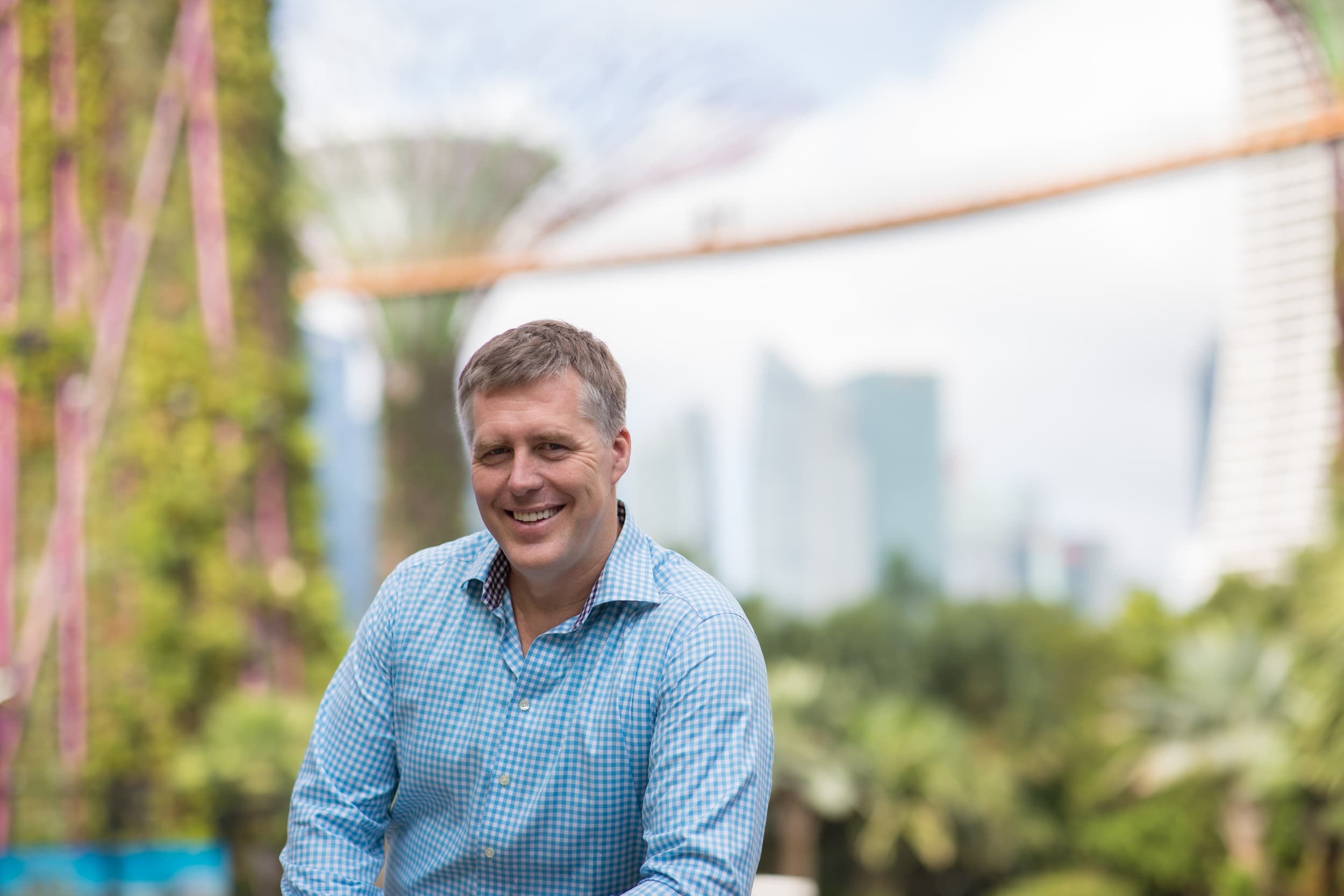
Brett is a four-time founder (Darra Tyres, Gladfish, EzyTrac, Anaboo) and the operator behind AIOS, Anaboo's AI Operating System. He writes from inside the build, installing AI in his own businesses first and reporting back what actually moves the numbers. Based between Singapore, the UK and Australia.