Singapore's national AI strategy: what UK and Australian businesses must copy
TL;DR
Singapore has bundled six months of free premium AI tools into its national SkillsFuture upskilling programme, backed by a National AI Council, a 2,000-leader bootcamp (DLAB), and a 24-institution AI Risk Management Toolkit. The UK is delaying copyright reform and spending £500 million reactively. Australia has committed AUD 29.9 million to an AI Safety Institute but has no unifying national strategy. If your government is not moving, your business needs to build its own AI strategy, now.
What has Singapore actually done?
In its latest budget, the Singaporean government announced that any citizen who signs up for a relevant SkillsFuture course receives six months of free access to a suite of premium AI tools. This is a two-pronged move: it upskills the population while simultaneously embedding AI into daily working life. It is not a token gesture, it is engineered behaviour change at national scale.
They are not just handing people a fish. They are teaching people to fish with the most advanced gear available. The real power of AI is not the technology itself, but the ability of people to use it effectively. Singapore's policy understands that. Most other governments do not.
Why is the SkillsFuture and AI tools bundle so effective?
Most upskilling programmes suffer from a fatal flaw: they teach concepts in isolation from the tools. People learn the theory, then return to workplaces where the software is either unavailable or unaffordable. The learning decays. Singapore has closed that gap by tying production-grade tools directly to the course.
The winners will be those who are willing to move fast, to experiment, to make mistakes, and to learn from them.
That is not an abstract principle, Singapore has operationalised it. While other nations run endless consultations, Singapore is executing. That distinction is the difference between a nation that shapes the AI revolution and one that reacts to it.
What is Singapore's National AI Council and why does it matter?
The free tools initiative is one component of a larger, meticulously coordinated national AI strategy. At its centre is the National AI Council, a dedicated body responsible for aligning every government initiative, every policy, and every dollar of expenditure with the national AI vision.
This is what strategic alignment looks like in practice. It breaks down the silos between government, industry, and academia and gets every stakeholder pulling in the same direction. That kind of coordinated effort is conspicuously absent in both the UK and Australia.
Alongside the Council, Singapore is running the Digital Leaders Accelerator Bootcamp (DLAB), an intensive programme designed to train 2,000 business leaders to think like AI natives. The logic is sound: AI transformation cannot be driven from the basement. It has to be owned at the C-suite. Leadership teams need to be fluent in AI, able to identify opportunities, manage risks, and guide their organisations through fundamental change.
How is Singapore managing AI risk without stalling progress?
The Monetary Authority of Singapore has collaborated with 24 financial institutions to develop a comprehensive AI Risk Management Toolkit. This is not a vague set of guidelines, it is a practical, actionable framework that helps businesses navigate the ethical, legal, and operational risks associated with AI.
Rather than letting fear of the unknown paralyse progress, Singapore has systematically identified, understood, and mitigated the risks. The result is that businesses have the confidence to innovate and experiment. This is what it looks like when a government has a real plan and the will to execute it.
See where AI fits in your business. Free.
A 45-minute audit. We map the highest-value automations and what they're worth in time and money. No pitch, no pressure.
Why is the UK falling behind on AI policy?
The contrast with the United Kingdom is blunt. The government recently announced it was delaying copyright reform for AI. For businesses trying to build long-term AI strategies, this creates a significant grey area. You cannot commit capital with confidence when the fundamental rules are in constant flux. Indecision of this kind is a killer for innovation.
The government has launched a £500 million Sovereign AI Fund. On the surface, that sounds significant. In practice, the private sector is pouring billions into AI. £500 million is a reactive, piecemeal gesture, it lacks the coherence and ambition of Singapore's approach entirely. It is catch-up, not leadership.
In the world of AI, speed is everything.
The deeper problem in the UK is cultural. There is a systemic tendency towards risk aversion, a fear of getting it wrong, that produces slow, cautious policy-making in an environment where pace is the competitive advantage. Building perfect consensus takes time the UK does not have.
What is Australia doing, and is it enough?
Australia sits somewhere between the UK's hesitation and Singapore's decisiveness. The government has committed AUD 29.9 million to establish an AI Safety Institute, and it is amending the Privacy Act to account for AI. Both are necessary and commendable actions.
But they are happening in isolation. There is no overarching national strategy that connects these individual initiatives to a unified economic vision. It is like acquiring every component of a high-performance engine without a blueprint for assembly. A safety institute is worthwhile, but how does it fit into a broader plan for growth? Privacy Act reform is essential, but how does it align with a national framework for AI innovation?
Without strategic clarity, individual efforts do not add up to more than the sum of their parts. Australia has the talent, the resources, and the potential to be a significant player in the AI revolution. The missing ingredient is direction at national level.
What should your business do if your government is not leading?
You are a business owner in London, Manchester, Sydney, or Melbourne. You cannot afford to wait for politicians to align on a framework. The pace of change is too fast. By the time any government produces a coherent national AI strategy, the competitive window will have narrowed significantly.
The answer is to build your own micro-national AI strategy, to treat your business as a sovereign entity responsible for its own AI future.
What that looks like in practice:
- Invest in training at every level, not just the technology team. From the C-suite to the front line. Leadership fluency in AI is non-negotiable.
- Create a cross-functional AI team with representation from every part of the business, not just IT.
- Allocate a dedicated budget for AI experimentation and protect it from short-term quarterly pressure.
- Run pilot projects, start small, measure rigorously, and scale only what demonstrates value.
- Build your own risk management framework, one page, practical, covering data governance, ethics, and decision rights. You do not need a government toolkit to begin.
- Create psychological safety, people need permission to experiment and fail without penalty. That culture has to be built deliberately.
A small, agile business with a smart AI strategy can now compete with, and even outperform, a large, established incumbent.
The barriers to entry have been demolished. The old rules around scale and resources no longer apply in the way they once did. What separates winners from losers in this environment is the willingness to act, not the size of the budget.
What to do this week
- Audit your current AI tools. List what you are actually using versus what you are paying for. Identify the gaps.
- Pick one manual process that could run on AI this quarter. Name it specifically. Assign an owner and a deadline.
- Book one hour with your leadership team to discuss AI priorities, not the technology, the business outcomes you want from it.
- Set a training budget. If Singapore is giving its citizens free tools tied to structured courses, the minimum standard for your business is funding your people to learn.
- Draft your own AI risk principles. One page. Cover data handling, decision rights, and ethical use. Do not wait for a government framework to hand you the answer.
Where to from here
Book a free 60-minute AI audit, we'll explore exactly what workflows are worth augmenting with AI.
Live with passion & AI,
Brett
Host a podcast? Have Brett on as a guest.
Straight talk on implementing AI in real SMEs, no jargon, plenty of receipts from the businesses we run.
Frequently asked questions
What AI tools is Singapore giving its citizens for free?
+
Any citizen who signs up for a relevant SkillsFuture course receives six months of free access to a suite of premium AI tools. The initiative ties the tools directly to structured training so citizens practise with production-grade software while learning.
What is Singapore's National AI Council?
+
The National AI Council is a dedicated body of experts and leaders responsible for aligning every government initiative, policy, and budget line with Singapore's national AI vision. It functions as the central nervous system of Singapore's AI ecosystem, ensuring coordinated execution across government, industry, and academia.
What is the Digital Leaders Accelerator Bootcamp (DLAB)?
+
DLAB is an intensive programme run by the Singaporean government designed to train 2,000 business leaders to think like AI natives. It is built on the premise that AI transformation must be owned at C-suite level, not just by technical teams.
What has Singapore's Monetary Authority of Singapore done on AI risk?
+
The Monetary Authority of Singapore collaborated with 24 financial institutions to develop a comprehensive AI Risk Management Toolkit, a practical, actionable framework for navigating the ethical, legal, and operational risks of AI, giving businesses confidence to innovate.
How much is the UK's Sovereign AI fund, and is it enough?
+
The UK government launched a £500 million Sovereign AI Fund. While it is a positive gesture, it is a reactive, piecemeal investment relative to the billions the private sector is committing, and it lacks the coherent national strategy seen in Singapore.
What is Australia's AI Safety Institute budget?
+
Australia committed AUD 29.9 million to establish an AI Safety Institute. It is also amending its Privacy Act to account for AI challenges. Both are necessary steps, but without an overarching national strategy linking these initiatives, they risk delivering less than the sum of their parts.
What can a business do if its government has no clear AI strategy?
+
Build your own micro-national AI strategy. Invest in training across every level of the organisation, create a cross-functional AI team, set a dedicated experimentation budget, run small pilot projects, and develop your own risk management principles tailored to your business context.
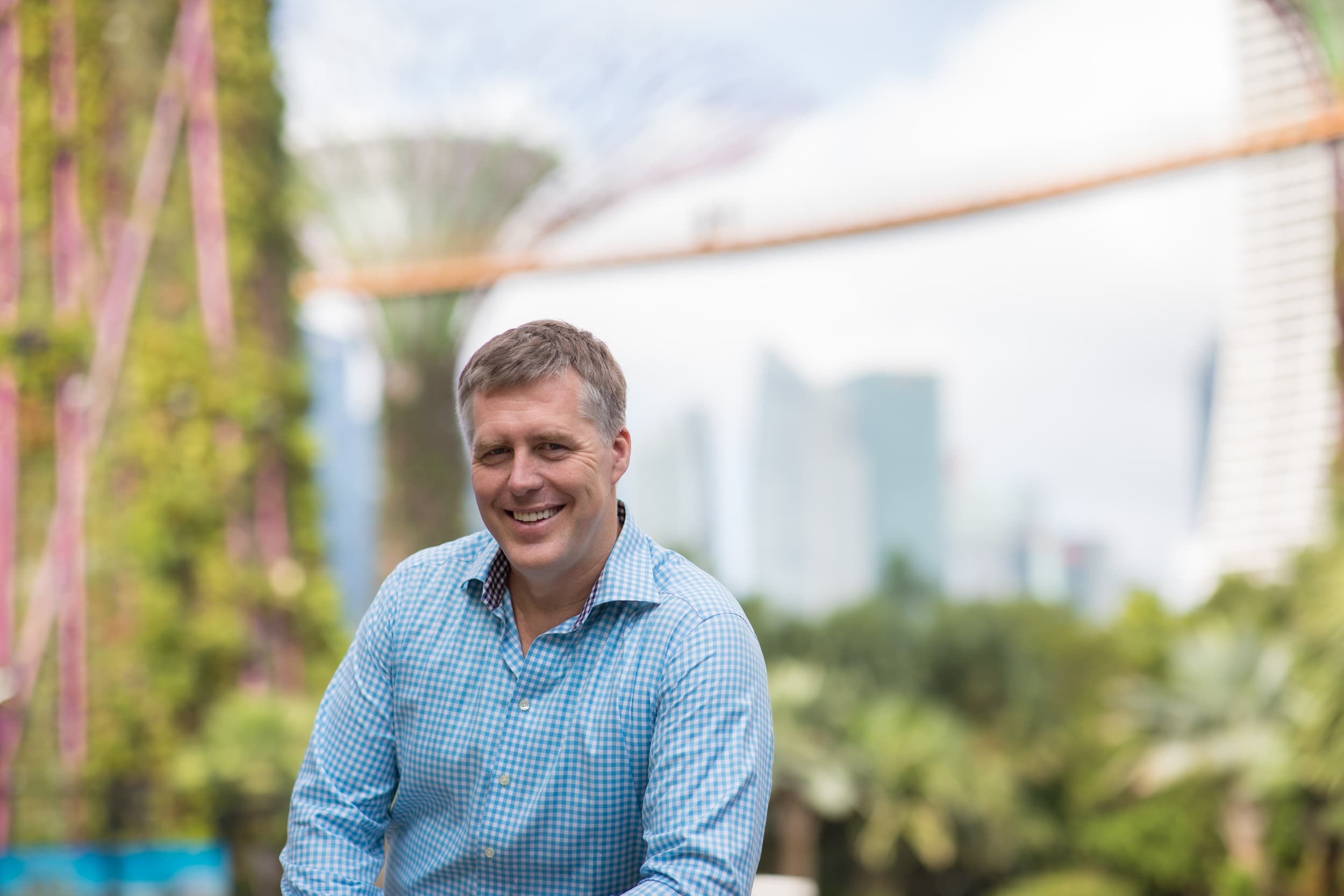
Brett is a four-time founder (Darra Tyres, Gladfish, EzyTrac, Anaboo) and the operator behind AIOS, Anaboo's AI Operating System. He writes from inside the build, installing AI in his own businesses first and reporting back what actually moves the numbers. Based between Singapore, the UK and Australia.