92% used, 7 minutes to reset: token anxiety is the new frontier of mental health risk
TL;DR
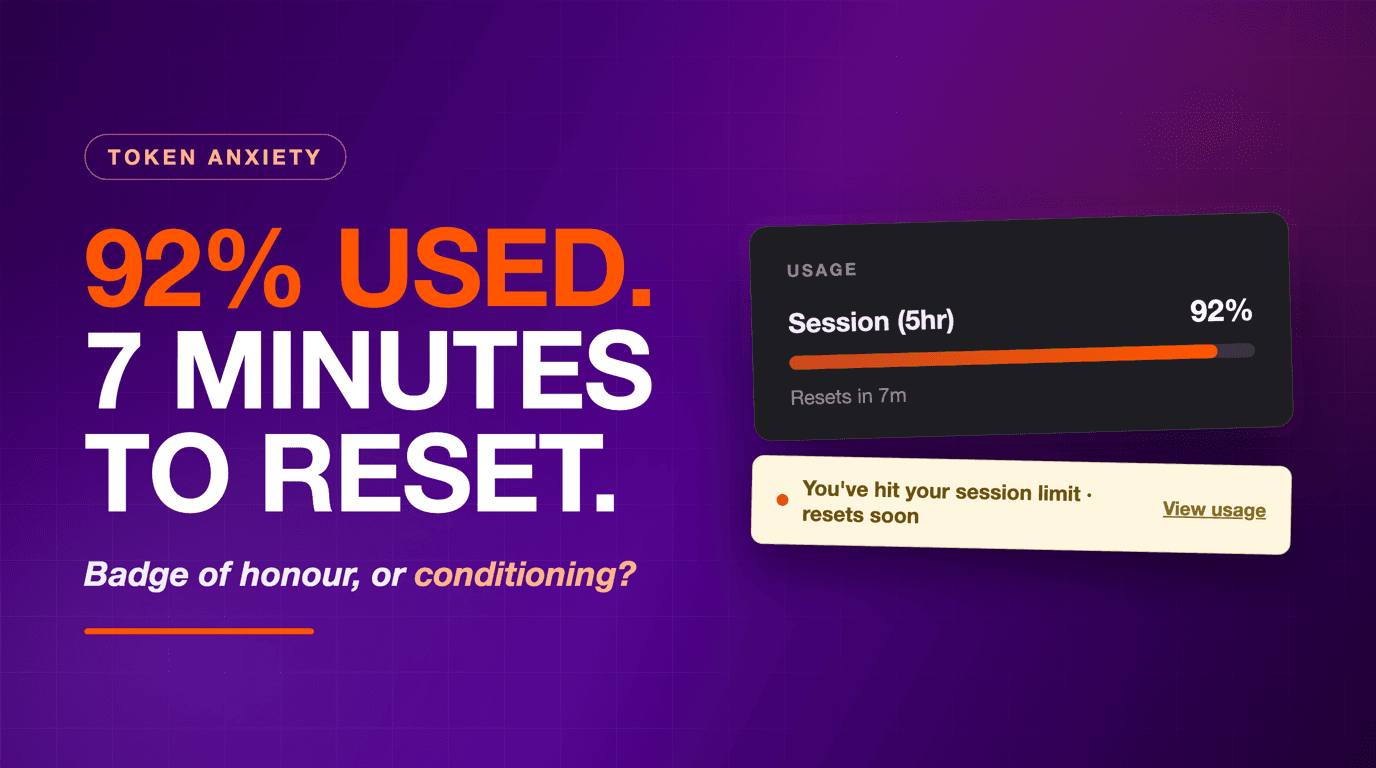
That screenshot above is real: 92% of my Claude session used, 7 minutes until reset. The tightness in your chest when you see it is real too. Millions of people now ration their own thinking against a usage meter, sprint before lockouts, and plan their day around reset timers, and we're calling it a badge of honour. It isn't. It's operant conditioning, the same wiring as slot machines and energy bars in mobile games. The fix isn't meditation, it's architecture: build your AI Operating System to be model-agnostic, so your context and automations are yours and the model underneath, Claude, OpenAI, or a local model, is just an interchangeable engine. Remove the dependence and the anxiety goes with it.
Watch: the two-minute version
The interview cut: the three questions I get asked most about token anxiety, answered to camera.
(This video was produced using Brett's article script with Anaboo's AIOS, Brett's Eleven Labs voice & Brett's HeyGen avatar)
Two reactions, one progress bar
Just sit down, coffee in hand, and look at that screenshot with me.
Session: 92% used. Resets in 7 minutes. And shortly after, the polite little banner arrived:
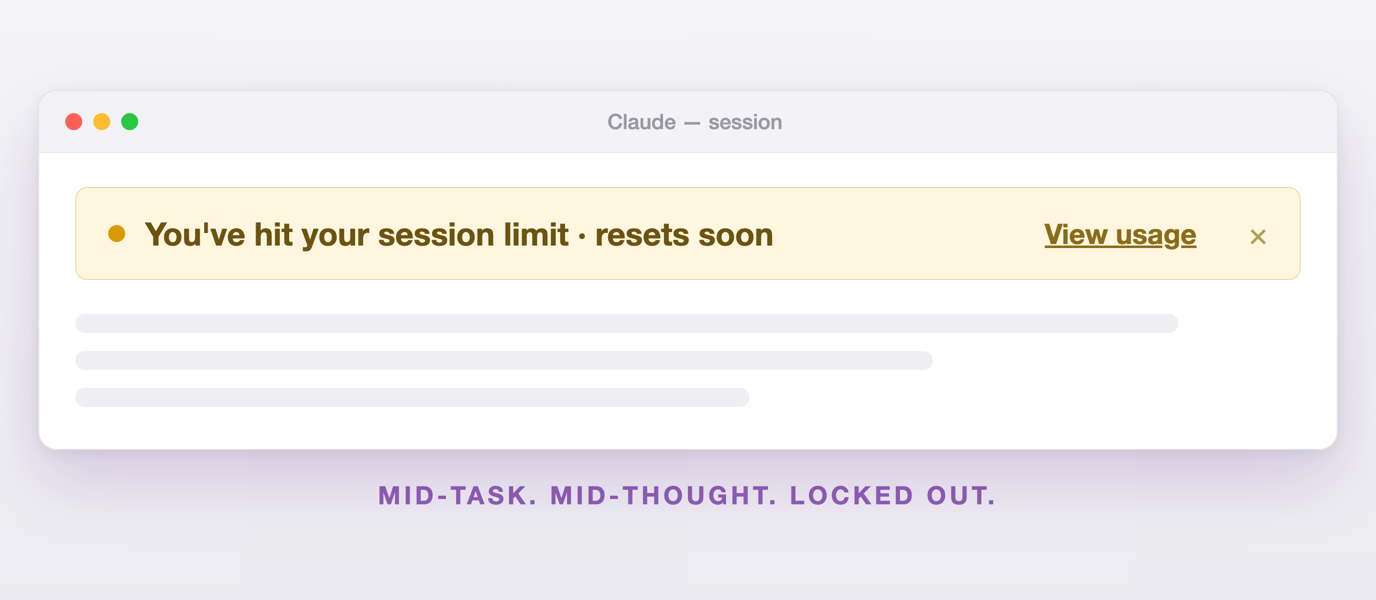
I took those screenshots mid-task. And in that moment I caught myself doing something I want to talk about honestly, because I guarantee you've done it too.
My chest tightened. I started rationing my own thoughts. Should I ask that follow-up question, or save it? Is this prompt worth the tokens? Maybe I'll batch these three things into one message...
Then the other voice kicked in: Hang on, 92% with 7 minutes to go? That's not failure. That's perfection. I squeezed every drop out of my allocation and I live to fight another day.
Two completely opposite emotional reactions. Same progress bar.
That's when it hit me: this isn't a productivity story. It's a psychology story.
The new anxiety nobody signed up for
If you use Claude, ChatGPT, Gemini, any of the big models on a subscription, you know this feeling. It has a few flavours:
- The ration. Watching the meter and deliberately dumbing down your questions to make the allocation last.
- The sprint. Realising you've got 7 minutes left and frantically trying to finish the thought before the gate comes down.
- The lockout. Mid-flow, mid-idea, mid-deadline, and the tool you've built your working day around simply switches off and tells you to come back in five hours.
- The reset ritual. Knowing exactly when your limits refresh and planning your actual life around it. (Be honest. You've done the maths on your reset time.)
We laughed at people who couldn't put their phones down. Now we're checking a usage bar the way a smoker checks the packet. This is the new frontier of mental health risk at work, not robots taking jobs, but humans being drip-fed their own thinking tools and feeling genuine stress about the meter.
And here's the bit that worries me: it's becoming a badge of honour. "Hit my limit again today" is the new "I'm so busy." We're wearing the lockout like a medal.
See where AI fits in your business. Free.
A 45-minute audit. We map the highest-value automations and what they're worth in time and money. No pitch, no pressure.
My take: this isn't a badge of honour. It's conditioning.
I see it differently, and I'll say it plainly.
When a tool intermittently rewards you, meters you, and cuts you off on a schedule it controls, that's not a pricing model. That's an operant conditioning loop. Slot machines run on the same wiring. So do mobile games with energy bars. Come back in 7 minutes. Come back in 5 hours. Good user.
The technocrats running these platforms aren't evil, they have real compute costs and real capacity constraints. I get it. But the effect on us is the same regardless of the intent: our brains are being trained to organise our thinking around someone else's meter. We're learning to feel scarcity about our own cognition. We're letting a usage bar decide when we're allowed to be smart.
AI is a mirror that forces you to see inefficiency clearly. Well, this particular mirror is showing me something uncomfortable: the most powerful thinking tools in human history are being delivered through the same engagement mechanics as a fruit machine, and we're calling it a subscription.
You don't have a technology problem. You have a dependency problem being installed in real time.
Why I built my AIOS to be model-agnostic
This is exactly why, when I built my AIOS, the AI Operating System that runs Ezytrac, my property business with 700+ properties and a team of 30, I made one architectural decision before anything else:
No single model gets to own the system.
My AIOS is model-agnostic. The intelligence layer sits in my workspace, my context, my data, my processes, my automations. The model underneath is interchangeable:
- Claude when it's the best brain for the job (and honestly, right now it often is).
- OpenAI when I want a second opinion or Claude's having a bad day.
- My local models for the steady background work, and for anything I want running on my hardware, with my data, on my terms, with no meter at all.
When that progress bar hits 92%, you know what I feel now? Nothing. Mild curiosity, maybe. Because the work doesn't stop, it just routes somewhere else. The anxiety is gone not because I meditated it away, but because I removed its cause: dependence on a single supplier's permission to think.
And there's a hard business benefit hiding inside the mental health one. Whatever Claude, Gemini, OpenAI or anyone else does next, price hikes, limit cuts, model changes, terms changes, I keep using the best solution available at that moment. The context, the knowledge base, the automations are mine. The models are just engines I swap in and out.
In property we'd never tolerate a managing agent who locked us out of our own portfolio for five hours a day. Why are we tolerating it with our own thinking?
The principle underneath it
This is the same principle that runs through everything we do at Anaboo: AI as a partner, not a prophet, and definitely not a landlord.
Your AIOS should be built so that:
- Your context lives with you, not inside one vendor's chat history.
- Your data stays local wherever it can.
- Any model can plug in, cloud or local, today's best or next year's best.
- No usage meter can stop your business, or hijack your nervous system.
Progress beats perfection, so you don't need to build all of that on day one. But make model-independence a founding decision, not a retrofit. Because the longer you build your workflows, and your habits, and your stress responses, around one company's meter, the more that meter owns you.
The screenshot says "resets in 7 minutes." Fine. But the only question that matters is: whose system are you building, theirs, or yours?
What to do this week
- Notice the meter-check. Count how many times you look at your usage bar in a day. Awareness first, that number is data about dependency, not productivity.
- Move one workflow's context out of the chat window. Put the prompt, the background and the instructions in a document you own, so the workflow survives a vendor switch.
- Run one task on a second model. Take something you always do in Claude and run it through OpenAI or a local model. You're not switching, you're proving you can.
- Stop wearing the lockout as a medal. Hitting your limit isn't evidence you're working hard. It's evidence your architecture has a single point of failure.
Where to from here
Book a free 60-minute AI audit, we'll look at where your business depends on a single AI vendor's meter, and map out a model-agnostic AIOS so the work never stops when the tokens run out.
Live with passion & AI,
Brett
Need an AI operator inside your team?
Place a Chief AI Officer, an AI Officer, or embed an Anaboo Forward Deployed Engineer for 3–6 months.
Frequently asked questions
What is token anxiety?
+
Token anxiety is the stress AI users feel watching their subscription usage limits, rationing questions to stretch an allocation, sprinting to finish work before a session limit hits, or planning their day around reset timers. It's an emerging workplace stressor as more knowledge work depends on metered AI tools.
Why do AI tools like Claude and ChatGPT have usage limits?
+
Providers meter usage because running large models has real compute costs and capacity constraints. But the effect on users is the same regardless of intent: work and thinking get organised around a vendor's meter, and lockouts arrive mid-task on a schedule the user doesn't control.
What does model-agnostic mean for an AI Operating System?
+
A model-agnostic AIOS keeps your context, data, knowledge base and automations in your own workspace, with the AI model underneath treated as an interchangeable engine. You can route work between Claude, OpenAI, Gemini or local models, so no single vendor's limits, pricing or product decisions can stop your business.
How do I reduce dependence on a single AI provider?
+
Keep your context and prompts outside any one vendor's chat history, store your data locally where possible, build workflows that can plug into more than one model, and add a local model for steady background work. Make model-independence a founding architecture decision, not a retrofit.
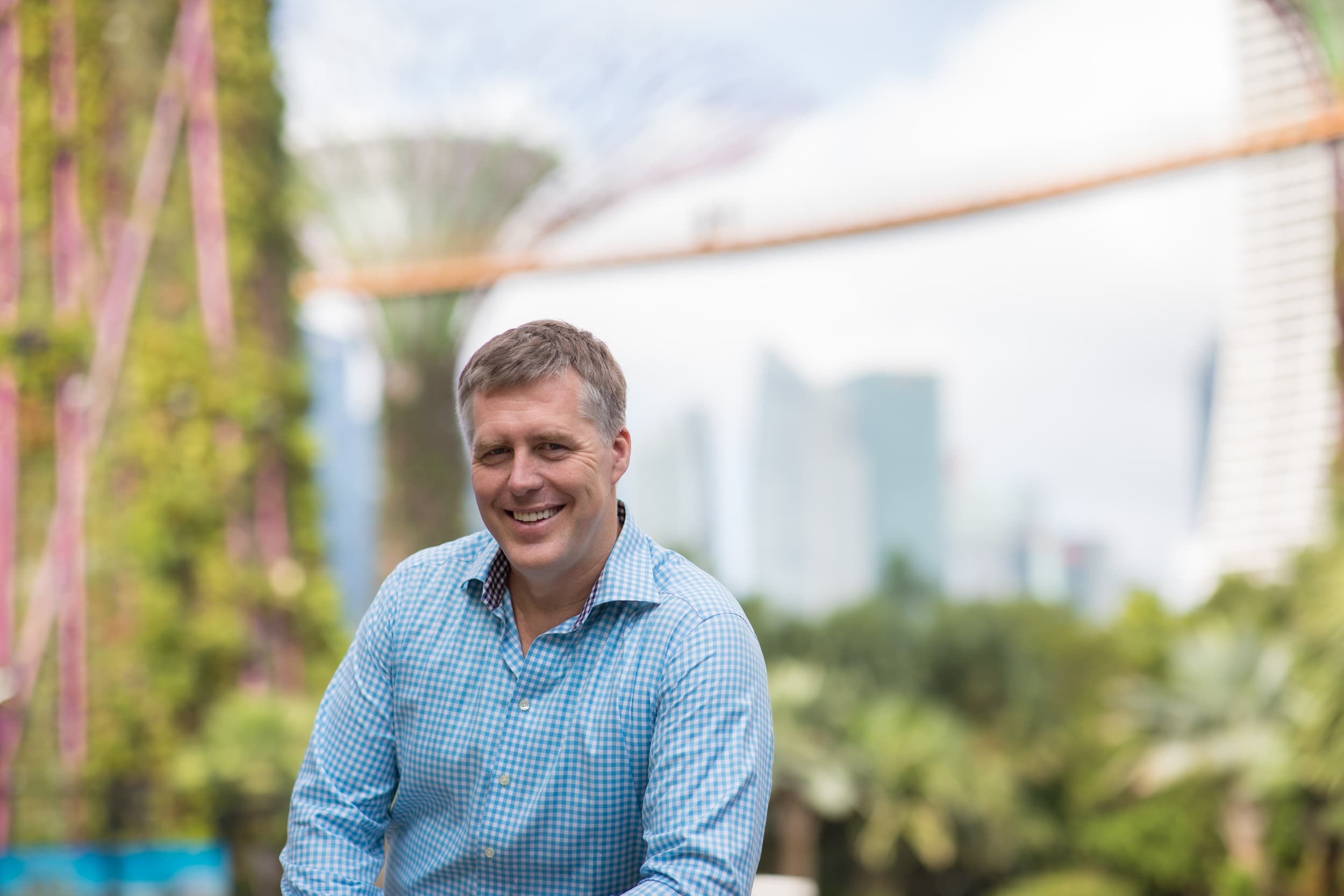
Brett is a four-time founder (Darra Tyres, Gladfish, EzyTrac, Anaboo) and the operator behind AIOS, Anaboo's AI Operating System. He writes from inside the build, installing AI in his own businesses first and reporting back what actually moves the numbers. Based between Singapore, the UK and Australia.