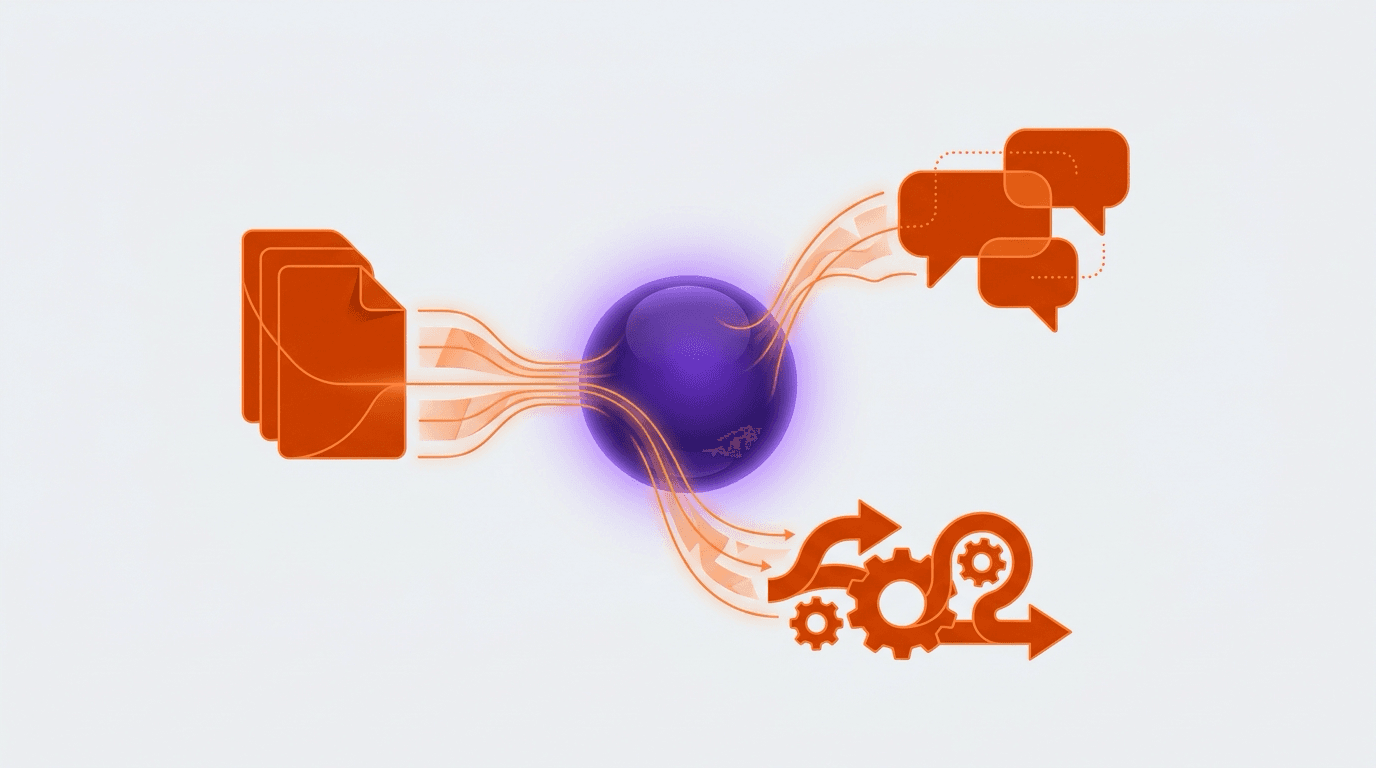
AI copyright law 2025: why the free training data era is ending
TL;DR
The UK government has reversed course on its proposed broad text and data mining (TDM) exception, after 88% of public consultation respondents backed stronger copyright protection and only 3% supported the government's original position. Australia has taken the same stance. Licensing deals between AI developers and major content owners are already being struck. The businesses still treating their content as a passive marketing cost are about to get a rude awakening.
Why did the UK just reverse its AI copyright policy?
For a while, the UK looked like it was going to hand AI developers a free pass. The proposed broad TDM exception would have allowed companies to train models on any copyrighted material available online, with only an opt-out mechanism for creators, a policy the tech lobby heavily favoured.
Then the creative industries pushed back. Musicians, authors, journalists, and filmmakers united in opposition, and the consultation results were unambiguous:
- 88% of respondents favoured strengthening copyright and requiring licences
- 3% backed the government's original preferred option
The result: under the Data Use and Access Act 2025, the UK has officially abandoned the broad TDM exception. That is a seismic policy reversal, and it sets a precedent the rest of the world will follow.
What does the UK's new position actually mean in practice?
The default has shifted. Before: AI companies could train on whatever they found online and let creators opt out. Now: if you want to use someone else's content to train your AI, you need their permission and you need to pay for it.
The UK is now exploring two alternative models:
- A narrow exception limited to non-commercial scientific research
- A statutory licensing system, similar to what India is exploring, where AI companies pay a set fee to use copyrighted material
The government has also confirmed it will remove existing provisions that protect "computer-generated works, " meaning AI-generated content will carry even less legal protection going forward. The direction of travel is unmistakable.
Why is Australia standing alongside the UK?
Australia's creative and media industries have taken their fight directly to Parliament, holding a major event, Powering Intelligence: Media, Culture and the Future of Innovation, with a unified demand: AI developers must be required to licence the content they use.
Attorney-General Michelle Rowland has been unequivocal: there are "no plans to weaken copyright protections" in the face of AI lobby pressure. Australia had already rejected a broad TDM exception in 2025. The creative sector contributes $67 billion to the Australian economy, and it has no intention of watching that value be extracted for free.
The message from both governments is the same: AI exceptionalism, the idea that scraping content for model training is categorically different from copying it, is over.
See where AI fits in your business. Free.
A 45-minute audit. We map the highest-value automations and what they're worth in time and money. No pitch, no pressure.
What licensing deals are already in the market?
The market isn't waiting for legislation to catch up. Commercial licensing agreements are already being struck:
- Google has a deal with the Australian Associated Press
- OpenAI has deals with The Guardian and News Corp
- Canva has a deal with Getty Images
As the managing director of The Guardian Australia put it:
"Licensing is happening and it has to."
No market functions when one party can take something for free and charge for it. That principle is now reasserting itself across the content economy, and these deals are the proof.
What does the end of free training data mean for AI development?
Making large-scale AI model development more expensive has several knock-on effects:
- Greater focus on smaller, more efficient models trained on curated, high-quality datasets rather than the entire scraped internet
- Accelerated investment in synthetic data, models trained on data generated by other AI models rather than human-created content
- A reshaping of competitive advantage away from "we scraped more data" toward "we licensed better data"
The companies that got in early on quality licensing deals will have a structural advantage. Those that didn't are facing a significant cost catch-up.
Why your content is now a commercial asset, not just a marketing cost
In a world where AI companies must pay for training data, every piece of original content your business has produced carries a new kind of commercial value. The articles, videos, designs, and datasets you have built up are potential licensing assets, not just marketing collateral.
Companies that have been consistently producing high-quality, original work are sitting on something more valuable than they realise. That is the opportunity the creative industries have already identified. Most business owners have not yet woken up to it.
What legal risk are you carrying right now?
If your business relies on AI tools that were trained on unlicensed data, the liability questions are already forming:
- What happens when content owners demand compensation for training data that was scraped without permission?
- What happens when the regulatory landscape shifts and the tools you depend on become non-compliant?
- What if an AI tool you use is found to have been trained on infringing material?
Don't accept vague assurances about "publicly available data." That framing is already being tested in courts on both sides of the Atlantic. Demand transparency from your AI vendors, in writing, not in marketing copy.
What to do this week
Audit your IP. Map what content your business owns and whether you have current copyright registrations, terms of use, and licensing agreements in place. In this environment, your content library is a balance-sheet asset, start treating it like one.
Question your AI vendors. Ask specifically: Where does your training data come from? Is it licensed? What indemnities do you offer if your training data is found to be infringing? Push past the PR response and get answers in writing.
Look for licensing opportunities. If you run a content-rich business, speak to a legal adviser about whether your content assets could be licenced to AI developers. This is a revenue stream that barely existed two years ago, and the businesses that move first will benefit most.
Stay close to the law. The Data Use and Access Act 2025 in the UK and Australia's ongoing copyright review will both continue to evolve quickly. Set a quarterly reminder to check for updates, this area is moving faster than most businesses realise.
Where to from here
Book a free 60-minute AI audit, we'll explore exactly what workflows are worth augmenting with AI.
Live with passion & AI,
Brett
Host a podcast? Have Brett on as a guest.
Straight talk on implementing AI in real SMEs, no jargon, plenty of receipts from the businesses we run.
Frequently asked questions
What is the UK's Data Use and Access Act 2025?
+
It is the legislation under which the UK government officially abandoned its proposed broad text and data mining exception to copyright law, reversing a policy that would have let AI developers train on copyrighted content with minimal restrictions.
Why did the UK reverse its AI text and data mining policy?
+
A public consultation found that 88% of respondents favoured strengthening copyright protections and requiring licences for AI training data. Only 3% supported the government's original preferred option, making the reversal politically unavoidable.
What is Australia's position on AI copyright and training data?
+
Australia has rejected a broad text and data mining exception and, under Attorney-General Michelle Rowland, confirmed there are no plans to weaken copyright protections. The creative sector, worth $67 billion to the Australian economy, has lobbied strongly for mandatory licensing.
Which AI companies have already signed content licensing deals?
+
Google has a deal with the Australian Associated Press, OpenAI has deals with The Guardian and News Corp, and Canva has a deal with Getty Images. These commercial agreements reflect a market-based licensing model emerging ahead of formal legislation.
What legal risk does my business face from AI tools trained on unlicensed data?
+
If an AI tool you rely on is later found to have been trained on infringing content, you could face liability questions around your use of that tool. Regulators and content owners are increasingly scrutinising how AI training data was sourced, and the liability questions are only just beginning to be asked.
Could my business licence its content to AI developers?
+
Yes. In a world where AI companies must pay for training data, original high-quality content is a commercial asset. Businesses with substantial content libraries should speak to a legal adviser about potential licensing opportunities, a revenue stream that barely existed two years ago.
What is synthetic data and why does it matter for the AI copyright debate?
+
Synthetic data is training data generated by AI models rather than sourced from human-created content. As licensing costs for human-created content rise, AI developers are expected to accelerate investment in synthetic data as an alternative, which reshapes what counts as competitive advantage in AI development.

Brett is a four-time founder (Darra Tyres, Gladfish, EzyTrac, Anaboo) and the operator behind AIOS, Anaboo's AI Operating System. He writes from inside the build, installing AI in his own businesses first and reporting back what actually moves the numbers. Based between Singapore, the UK and Australia.