Personalisation at Scale: How AI Segments Your List Without a Data Team
TL;DR
AI personalisation marketing means tailoring your messages to different groups of customers automatically, using the data you already hold. You no longer need a data team or expensive software to do it, AI reads your list, sorts it sensibly, and helps you say the right thing to the right person, at a scale a human team could never manage by hand.
What does "personalisation at scale" actually mean?
It means sending the right message to the right person, even when you have thousands of people on your list. For years that was a contradiction. You could be personal with ten customers because you knew them. Past a few hundred, everyone got the same email, the same offer, the same tone, and you crossed your fingers.
Personalisation at scale closes that gap. Instead of one message for everyone, you send messages shaped around who someone is and what they've done. A customer who bought from you last month hears something different from one who hasn't opened an email in a year. The person who clicked your pricing page gets a follow-up about pricing, not a generic newsletter.
The "at scale" part is what changed. A human can tailor ten emails. AI can tailor ten thousand, drawing on the same data you already have sitting in your systems.
Why does the same email for everyone leak money?
Because most of your list isn't ready for the message you're sending. When you blast one email to everyone, you're talking to people at completely different stages as if they're identical.
Think about it the way you'd think about your shop floor. At Darra Tyres, you wouldn't say the same thing to someone walking in for a quote as you would to a fleet customer who's been with you eight years. One needs reassurance and a price. The other needs to feel looked after and told what's new. Sending both the same script would waste the conversation.
Email is the same, except the cost is invisible. People quietly stop opening. They unsubscribe. They mark you as spam, which slowly damages whether your emails reach anyone at all. You don't see the leak, you just see results getting weaker and assume email "doesn't work anymore". Usually it works fine. The targeting is what's broken.
See where AI fits in your business. Free.
A 45-minute audit. We map the highest-value automations and what they're worth in time and money. No pitch, no pressure.
How does AI segment your list without a data team?
It reads the information you already hold and groups people for you. This is the part that used to need a specialist, and it's the part AI now handles quietly in the background.
Here's roughly what happens. Your customer data lives in a few places, your CRM, your email platform, your sales records, maybe your website. On its own, that data is just rows in a spreadsheet. A person could sort through it, but it would take days and they'd miss patterns. AI reads all of it at once and spots the natural groupings: who buys often, who's gone quiet, who spends more, who only ever buys one thing.
Then it tags people accordingly. Lapsed customers in one group. High-value regulars in another. New leads who haven't bought yet in a third. You didn't write rules for every case, the AI did the sorting based on actual behaviour, and it keeps the groups updated as people move between them.
The point is that this used to be a job title. Now it's a skill that sits inside your tools and runs without you thinking about it. That's what AI personalisation marketing really removes, not the data, but the need for a person to wrangle it.
What can AI actually personalise once the list is sorted?
More than just sticking a first name at the top of an email. The name trick fooled people in 2015. Today it personalises the substance, not just the greeting.
Once your groups are in place, AI can adjust the offer, showing winter tyres to one region and not another. It can adjust the timing, sending to each person around when they usually open their email rather than all at 9am. It can adjust the words, rewriting the same core message in a warmer tone for loyal customers and a more direct one for cold leads. It can even pick which product to feature based on what someone looked at last.
At EzyTrac, a landlord who's just had a tenant move out has different worries than one whose property has been let for years. The first wants reassurance about re-letting quickly. The second wants to know their investment is being looked after. AI lets you speak to both properly, from the same list, without writing every email by hand.
None of this replaces your judgement. You decide the strategy and the message. AI handles the sorting and the sending, so your small team can run campaigns that would otherwise need a department.
Isn't this just spam with extra steps?
No, and the difference matters. Spam is sending more to more people. Personalisation is sending less, but better, to the people who'll actually care.
A well-segmented campaign usually means a customer hears from you less often, not more, because they only get messages relevant to them. That's the opposite of the firehose. People stay subscribed because what lands is useful. Your reputation with email providers improves, which means more of your messages reach inboxes instead of spam folders.
There's a trust angle too. Personalisation crosses a line when it feels like surveillance, referencing things people didn't expect you to know. The sensible approach uses the obvious signals: what someone bought, what they clicked, how long they've been a customer. That feels like good service, the way a regular feels recognised when they walk in. Keep it on the right side of that line and personalisation builds trust rather than spending it.
How does a small business start without overcomplicating it?
Start with the data you already have and one clear split. You don't need a grand system on day one. You need to stop treating your whole list as one person.
Pick the most obvious division in your business, customers versus prospects, or active versus lapsed, and send those two groups different messages for a month. That alone usually moves the numbers. From there, AI can take over the sorting, find groups you wouldn't have spotted, and let you go deeper without adding hours to your week. The goal is to augment your existing marketing effort, not bolt on a second job.
The mistake is waiting until you've got perfect data and a big plan. You almost certainly have enough to make a meaningful start today. The tools to act on it are cheaper and simpler than they were even two years ago.
If you'd like to see what's hiding in the customer data you already hold, we offer a free AI audit. We'll look at how your list is organised, where your follow-up is leaking, and where AI could quietly do the sorting for you, no jargon, no pressure, just a practical look at what's possible.
Live with passion & AI,
Brett
Host a podcast? Have Brett on as a guest.
Straight talk on implementing AI in real SMEs, no jargon, plenty of receipts from the businesses we run.
Frequently asked questions
Do I need a data scientist to personalise my marketing with AI?
+
No. Modern AI tools read your existing customer data and group it for you, so a smart owner or marketing assistant can run personalisation that used to need a specialist.
Where does the AI get the data to segment my list?
+
From the systems you already have, your CRM, email platform, sales records and website behaviour, without you building anything new from scratch.
Will AI personalisation make my emails feel robotic?
+
Done well it does the opposite, because messages match what each person actually cares about, which feels more human than one generic blast sent to everyone.
Is AI personalisation only for big companies with huge lists?
+
No, it often helps smaller lists more, because a few hundred well-segmented contacts can produce better results than thousands treated identically.
How quickly can a small business start seeing results?
+
Most see clearer engagement within a few send cycles, because better-matched messages get opened and replied to more often than untargeted ones.
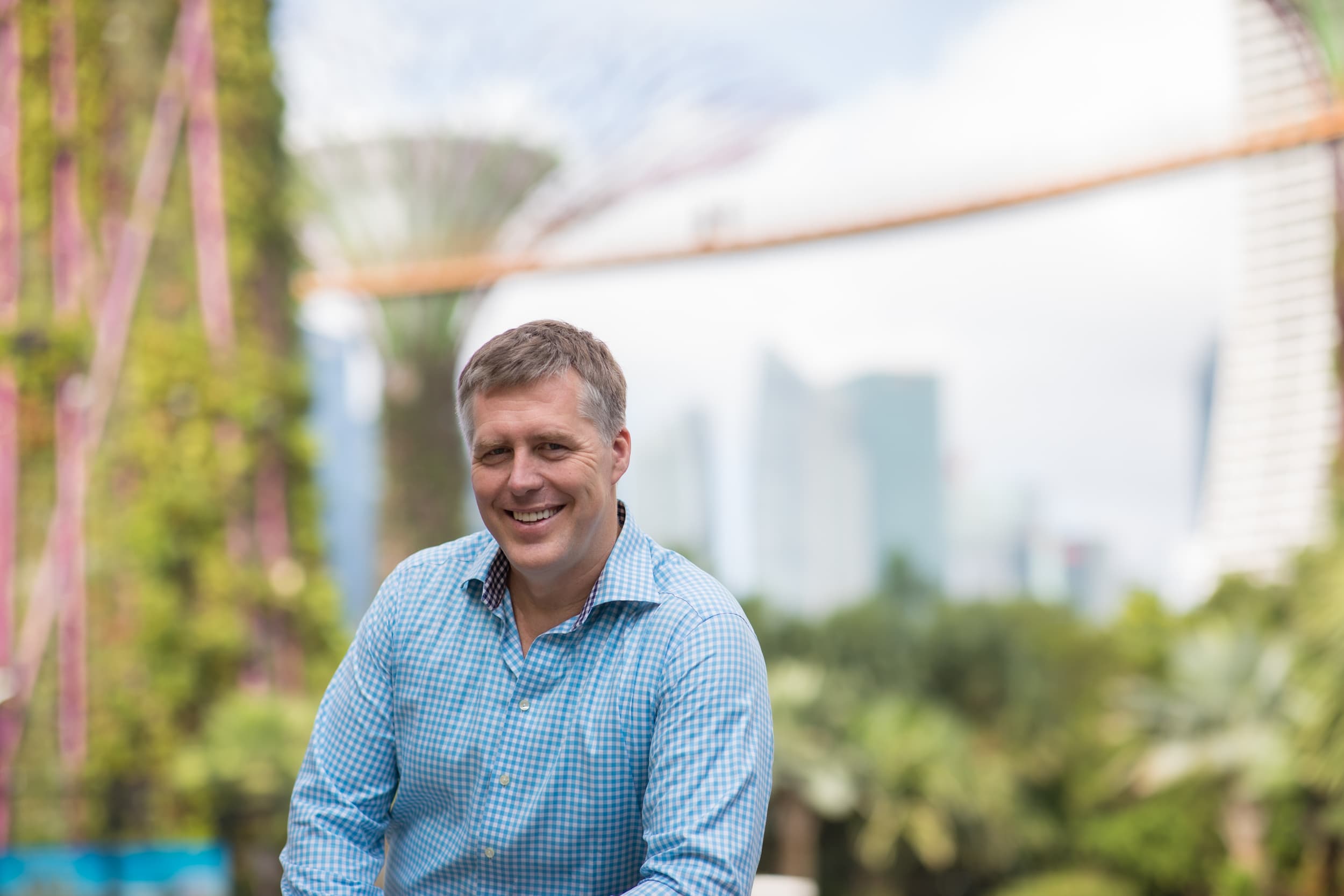
Brett is a four-time founder (Darra Tyres, Gladfish, EzyTrac, Anaboo) and the operator behind AIOS, Anaboo's AI Operating System. He writes from inside the build, installing AI in his own businesses first and reporting back what actually moves the numbers. Based between Singapore, the UK and Australia.