Iranian drone strikes exposed the biggest risk in your AI strategy
TL;DR
Iranian drone strikes on AWS data centres in the UAE knocked digital services offline for millions of people, payments, delivery apps, banking, all of it gone. The cloud is not ethereal; it is a building at a physical address, and that address just got hit. If your AI strategy runs on a single cloud provider or a single region, the Dubai blackout is not an abstract geopolitical event, it is a preview of your worst-case scenario. The biggest risk in your AI strategy may not be a flawed model or a biased dataset. It may be the building your AI lives in.
What actually happened in Dubai?
This was not a sophisticated cyberattack requiring a team of analysts to decipher. It was kinetic, metal meeting concrete. For millions of people across Dubai and Abu Dhabi, the digital world simply vanished overnight.
Consider what that looks like in practice:
- Payment systems failed, you couldn't pay for a taxi or a meal
- Delivery apps went dark
- Financial services infrastructure went offline, bank balances inaccessible
- Point-of-sale systems across retail stopped working
- Supply chains halted
The cloud, which was supposed to be resilient and fault-tolerant, proved to be anything but.
This is not an abstract threat discussed in boardrooms. It is the immediate, frustrating, and frankly frightening inability to conduct daily commerce. The comfortable illusion of a purely digital world has been shattered. Our digital lives are built on a very physical foundation, and that foundation is far more fragile than most businesses have ever been willing to admit.
Has the first AI war already begun?
What makes the UAE attacks significant beyond the physical damage is what they represent: the first large-scale test of AI-enabled cyber warfare. This is not just about drones hitting buildings. It is about the intelligence that guided them there and the digital chaos that ensued.
The attack methodology involved AI on both sides:
- Attackers used AI for sophisticated reconnaissance, identifying critical vulnerabilities in physical infrastructure
- Attackers used AI to craft more convincing phishing messages and malware, making it easier to breach initial defences
- Defenders used their own AI systems for real-time intrusion detection and attack pattern analysis
This is a level of automation and intelligence in attack methodology that has not been seen before at this scale. The attackers are getting smarter, their tools are more sophisticated, and the lines between state-sponsored aggression and cybercrime are increasingly blurred.
Your business is on this battlefield whether you know it or not.
The data you hold, the services you provide, and the infrastructure you rely on are all valuable assets in this conflict. The idea that you can simply outsource your security to a cloud provider and stop thinking about it is no longer viable. You are part of a complex, interconnected ecosystem, and a vulnerability anywhere in that system can have cascading effects.
Why is the word "cloud" the most dangerous term in technology?
The very term "cloud" is a masterpiece of marketing. It evokes something ethereal, boundless, and untouchable, a place where your data lives and your applications scale infinitely without worry. The reality is far more mundane.
The cloud is a global network of massive, windowless buildings filled with servers, cables, and cooling systems. These data centres are the physical heart of the digital world. They are on the ground, subject to everything from natural disasters to, as we have just seen, military strikes.
The Gulf region has been aggressively positioning itself as a major hub for this infrastructure:
- The Gulf data centre market is projected to reach US$9.5 billion by 2030
- Massive investments have been made to attract Amazon, Microsoft, and Google to the region
- The UAE built its economic model around being a safe, stable, globally connected digital hub
The drone attacks throw a massive spanner into that strategy. What is the point of being a global data hub if you cannot guarantee the physical security of the data? The cloud's fragility has been systematically downplayed for years. We have been so focused on software, algorithms, and applications that we have forgotten about the hardware, and the fact that all of this incredible technology relies on a physical supply chain that can be disrupted.
See where AI fits in your business. Free.
A 45-minute audit. We map the highest-value automations and what they're worth in time and money. No pitch, no pressure.
How did geopolitics just blow up your server?
It is tempting to view the Dubai attacks as a purely technical event, a failure of security protocols or a new category of cyber threat. That framing misses the bigger picture entirely.
This was geopolitics. Iran's strategic objective was not simply to cause a technical outage. It was to damage Dubai's hard-won reputation as a safe, stable, and reliable global hub for business and finance. For decades, the UAE has been a beacon of stability in a volatile region, attracting investment and talent from across the world. That reputation is its most valuable asset.
By demonstrating they can reach the core of Dubai's digital infrastructure, Iran sent one message: nowhere is safe.
This is hybrid warfare, conventional military action combined with economic and informational attacks to achieve a strategic goal. The deliberate objective is uncertainty and fear, hoping to drive investment away and undermine the UAE's economic model.
In this reality, businesses are no longer bystanders. They are on the front line. Your company's data, operations, and reputation are now pawns in a geopolitical game you never asked to play. You may have no position on the conflict, but the conflict has a position on you. The decision about where you host your data is no longer purely technical or financial, it is geopolitical.
What hard questions should you be demanding answers to right now?
Most businesses have done the sensible thing over the past decade: moved everything to AWS, Google Cloud, or Microsoft Azure and assumed the multi-trillion-dollar companies have thought of everything. The Dubai attacks prove this is a dangerously complacent position.
Here is what you need to ask, and you need to demand specifics, not marketing copy:
- Physical security: What are the physical security protocols at the specific data centre campus where your primary instances run? Not a generic statement on a website, detailed information about perimeter security, access control, and surveillance.
- Audit documentation: Have you requested the latest SOC 2 Type II audit report for that specific facility? It is your data. You have a right to know.
- Business continuity: Does your continuity plan exist? And if it does, does it account for an entire AWS, Azure, or Google Cloud region going dark for an extended period?
- Architecture: Are you running multi-region or multi-cloud deployments? Or are you a single point of failure waiting to happen?
- Testing: Have you actually war-gamed a failover to a different region or a different provider? Most companies have not. They have put all their eggs in one basket and are hoping for the best.
That is not a strategy. That is a gamble. And the stakes just got significantly higher.
Is your AI strategy architecturally fragile?
A simple data backup is not enough. The Dubai blackout was not a file corruption event, it was a regional outage. If your failover plan routes to the same provider or the same geographic region, it is not a failover plan. It is a false sense of security.
The biggest risk in your AI strategy may not be a flaw in your model, a biased dataset, or a compliance gap. It may be the building your AI lives in. It may be a geopolitical event in a country you have never visited.
The risks are more complex, more interconnected, and more physical than they have ever been.
The old assumptions about global stability and the safety of digital infrastructure are no longer valid. You can no longer afford to simply trust your cloud provider. You need to verify. You need to plan. You need to build resilience into the core of your business.
What to do this week
These are the immediate actions worth taking before another event forces your hand:
- Map your cloud dependencies. List every critical system and the cloud provider and region it runs on. If everything sits in one region, you have found your single biggest risk.
- Request your SOC 2 Type II reports. Ask your AWS, Azure, or Google account manager for the latest audit report covering the specific facility your instances use. If they stall, escalate.
- Audit your business continuity plan. Dust it off and check whether it includes a full regional outage scenario. If it does not, that gap is your next task.
- War-game a failover. Schedule a test where you simulate your primary cloud region going offline. Document what breaks, what slows, and what your actual recovery time looks like.
- Start the multi-cloud conversation. You do not need to rebuild everything overnight. Start with customer-facing and revenue-generating systems, the ones where downtime costs you most.
- Add physical infrastructure risk to your board risk register. Geopolitical risk and physical data centre risk now belong alongside cyber risk and operational risk at board level. If they are not there, put them there.
Where to from here
Book a free 60-minute AI audit, we'll explore exactly what workflows are worth augmenting with AI.
Live with passion & AI,
Brett
Want this installed in your business?
Bespoke AI implementation across your operations: strategy, build, rollout, and ongoing drift maintenance.
Frequently asked questions
What happened to AWS data centres in the UAE?
+
Iranian drone strikes hit AWS data centres in the United Arab Emirates, knocking out digital services for millions of people across Dubai and Abu Dhabi, including payment systems, delivery apps, and financial services infrastructure.
How does the Dubai blackout affect my business if I'm based in the UK or Australia?
+
If your infrastructure runs on a single cloud provider or a single region, you are a single point of failure. The Dubai attacks demonstrate that any AWS, Azure, or Google Cloud region can go dark, and if your business continuity plan doesn't account for that, you're gambling, not planning.
What is AI-enabled cyber warfare?
+
AI-enabled cyber warfare uses artificial intelligence for reconnaissance, phishing, malware generation, and attack analysis at scale. In the UAE attacks, AI was used on both sides, attackers used it to identify physical vulnerabilities and craft targeted intrusions; defenders used it for real-time intrusion detection and pattern analysis.
What is a SOC 2 Type II audit report and why should I ask for one?
+
A SOC 2 Type II report is an independent security assessment of a specific facility's controls over a defined period. It covers physical security, access control, and surveillance. You have a right to ask your cloud provider for the report covering the specific data centre campus where your instances run, not a generic policy document from their website.
What is multi-cloud architecture and do I need it?
+
Multi-cloud architecture means running critical systems across more than one cloud provider so that if one region or provider goes offline, your business keeps running. It is more complex to manage, but the Dubai attacks make a compelling case that single-provider deployments represent a serious and underacknowledged business risk.
How big is the Gulf data centre market?
+
The Gulf data centre market has been projected to reach US$9.5 billion by 2030, driven by major investments from Amazon, Microsoft, and Google. The UAE drone attacks directly threaten that projection by undermining confidence in the region's physical security guarantees.
What should a business continuity plan include after the Dubai attacks?
+
Your plan needs to account for an entire cloud region going dark for an extended period. That means multi-region deployments, tested failover to alternative providers, documented recovery procedures, and regular war-gaming, not just a backup sitting on the same platform in the same geography.
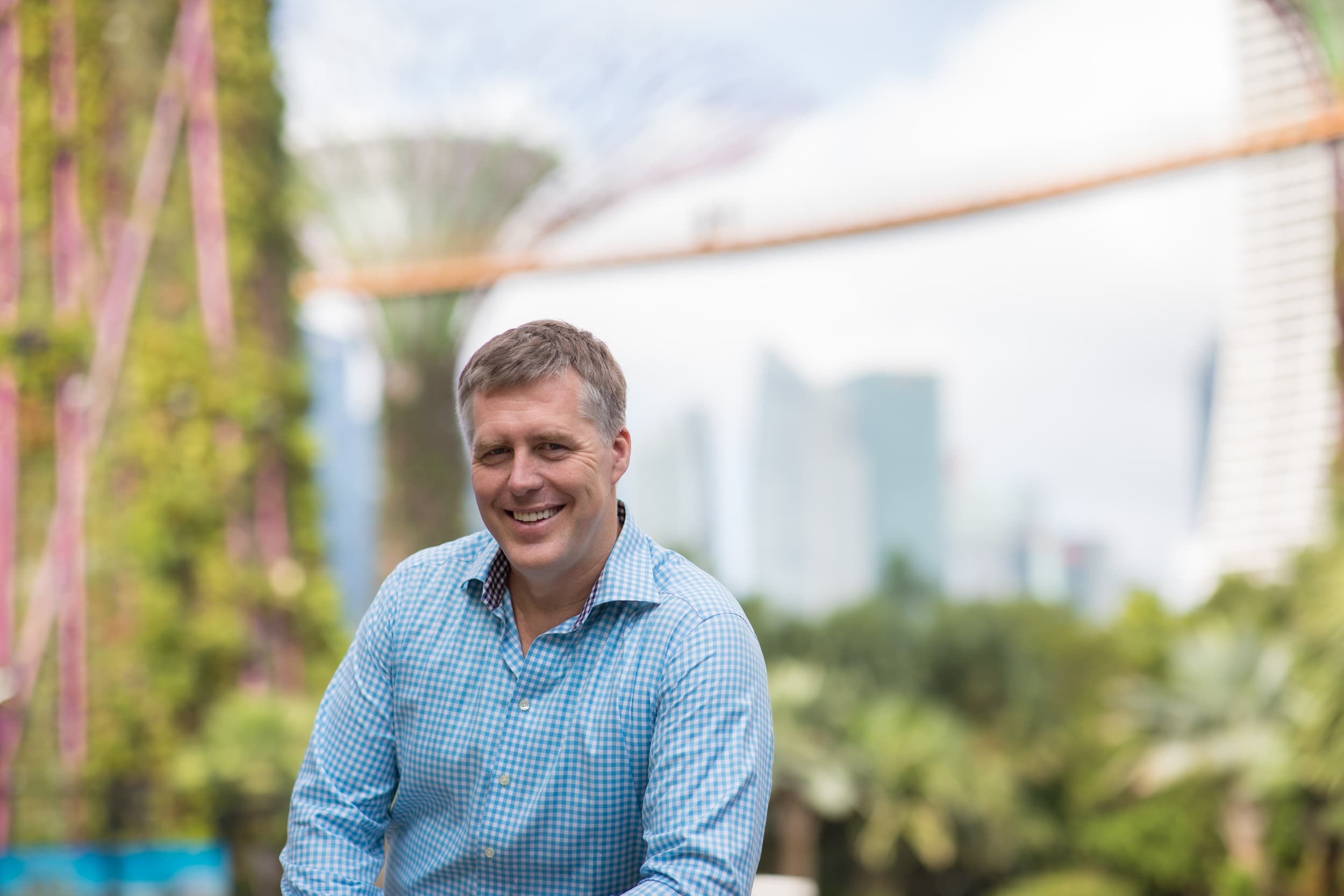
Brett is a four-time founder (Darra Tyres, Gladfish, EzyTrac, Anaboo) and the operator behind AIOS, Anaboo's AI Operating System. He writes from inside the build, installing AI in his own businesses first and reporting back what actually moves the numbers. Based between Singapore, the UK and Australia.