Singapore AI implementation: transforming sales, marketing and customer engagement
TL;DR
Singapore has committed S$1.6 billion under National AI Strategy 2.0 and attracted over $26 billion in global tech investment, making it Asia's dominant AI hub. For local companies, implementing sales AI, marketing AI, voice AI and conversational AI is no longer optional. Those doing it right are cutting customer acquisition costs by up to 57%, improving lead conversion by 40%, and handling 65–89% of customer inquiries without a human in the loop.
Why is Singapore leading Asia in AI adoption right now?
Singapore generates more AI innovation per capita than almost any nation on Earth, with over 944 AI startups currently operating within its borders. The city-state's AI market is projected to reach USD 4.64 billion by 2030, growing at 28.10% annually, the undisputed regional leader. Government frameworks including Smart Nation 2.0 and National AI Strategy 2.0 provide structured pathways for businesses of all sizes. The S$150 million Enterprise Compute Initiative in Budget 2025 gives Singapore-based companies access to cloud credits, consultancy services, and specialised support. The IMDA's SMEs Go Digital programme has already supported around 100,000 small and medium enterprises, while the GenAI Navigator provides SMEs with pre-approved generative AI solutions complete with grant support. The infrastructure, funding, and expertise are all in place. The question is whether you are using them.
What does sales AI actually deliver for Singapore companies?
Sales AI automates lead qualification, follow-up sequences, and customer engagement, enabling companies to scale their sales capacity without proportionally increasing headcount. Modern sales AI systems qualify leads through intelligent conversations, synchronise CRM data in real time, and nurture prospects with personalised messaging based on behaviour. Singapore AI implementation companies like Anaboo.ai deploy these solutions to integrate with Salesforce, HubSpot, and other popular platforms, automatically scheduling appointments and recommending tailored solutions without human intervention. The numbers are hard to ignore: companies implementing sales AI in Singapore typically see lead conversion rates improve by 40% or more, while customer acquisition costs drop by up to 57% within the first 90 days. In a market where margins matter, that kind of efficiency is a genuine competitive edge.
How does marketing AI work in Singapore's multilingual environment?
Marketing AI analyses customer behaviour patterns to predict purchasing intent, then automatically adjusts advertising budgets across channels, creates personalised content variations, and optimises campaigns in real time based on performance data. In Singapore's multilingual environment, English, Mandarin, Malay, Tamil, AI-powered systems can automatically translate and localise content for different audience segments, keeping brand messaging consistent across the full population. Email marketing AI segments audiences based on engagement patterns, sends communications at optimal times for each recipient, and automatically A/B tests subject lines and content to lift open rates. The result is marketing that feels personal even when delivered at scale, which is the only way to compete for attention in Singapore's crowded digital spaces.
What makes voice AI different from the old IVR phone systems?
Unlike traditional interactive voice response (IVR) systems that frustrate callers with rigid menu options, modern voice AI engages in natural, context-aware conversations. It can handle complex inquiries, process transactions, and provide personalised assistance, all without transferring to a human unless genuinely necessary. Singapore SMBs are rapidly adopting AI voice agents as part of the Smart Nation initiative, with particularly strong uptake in retail, hospitality, and financial services. Leading providers like WIZ.AI have built their technology specifically for Southeast Asian markets, with natural language processing optimised for regional dialects and Singlish expressions, and the ability to switch seamlessly between languages. Companies deploying AI voice agents report handling up to 65% of routine voice requests automatically. One Singapore business saved $47,000 in seasonal hiring costs during a holiday rush by using AI agents to handle 89% of customer inquiries.
See where AI fits in your business. Free.
A 45-minute audit. We map the highest-value automations and what they're worth in time and money. No pitch, no pressure.
How sophisticated has conversational AI become for Singapore businesses?
Today's conversational AI goes far beyond rule-based chatbots. Powered by large language models and advanced natural language processing, modern systems understand context, remember previous interactions, and provide nuanced responses that genuinely help customers solve problems. Singapore's chatbot market grew from USD 2.6 billion in 2019 to an estimated USD 9.4 billion in 2024, a reflection of how quickly the technology has matured and how much business value it now delivers. Leading platforms offer omnichannel support across WhatsApp, Facebook Messenger, Instagram, LINE, and other popular messaging apps. This matters in Southeast Asia, where 73% of internet users use messaging apps daily. Conversational commerce takes this further: rather than just answering questions, AI can guide customers through entire purchase journeys, recommending products, processing payments, handling post-purchase support, all within a familiar chat interface. Singapore retailers implementing conversational commerce report significant increases in both conversion rates and average order values.
What government support is available for Singapore companies adopting AI?
Several programmes directly reduce the cost of AI implementation. The Productivity Solutions Grant (PSG) provides subsidies for pre-approved AI solutions, making enterprise-grade technology accessible to SMEs. Industry Digital Plans for retail, legal, security, and tourism have been updated to include AI-specific recommendations and solutions. The Enterprise Compute Initiative provides cloud credits and consultancy support through partnerships with leading cloud service providers. Over 26 AI Centres of Excellence were established in 2024 alone, enabling cross-sector collaboration and innovation. The CTO-as-a-Service platform offers digital consultancy, technology readiness assessments, and access to curated AI tools for businesses at various stages of digital maturity. These are not small gestures, they exist because the government understands that AI adoption is a national competitiveness issue, and it is actively absorbing risk on behalf of local businesses.
What should you look for in a Singapore AI implementation partner?
Four things matter most. First, integration capability: the best AI implementations connect seamlessly with existing CRMs, ERPs, marketing platforms, and communication systems, confirm your partner has proven experience with the specific tools your business already uses. Second, multilingual support: any AI solution must handle English, Mandarin, and ideally other regional languages with native fluency, including local expressions and cultural nuances that vary across customer segments. Third, implementation timeline and ongoing support: simple automation typically deploys in 2–4 weeks; more sophisticated systems may require 8–12 weeks depending on integration complexity, and ongoing support matters as much as the build. Fourth, total cost of ownership: the right solution pays for itself through increased efficiency, higher conversion rates, and reduced operational costs, ask for detailed ROI projections and case studies from comparable Singapore businesses before committing.
What to do this week
- Audit your highest-volume customer touchpoints. Identify where your team spends the most time on repetitive communication, inbound enquiries, lead follow-up, appointment booking, and rank them by volume. These are your highest-priority AI candidates.
- Check your PSG eligibility. Visit the IMDA's SMEs Go Digital portal and confirm whether your business qualifies for Productivity Solutions Grant subsidies on pre-approved AI tools. The grant can significantly reduce upfront cost.
- Request the GenAI Navigator shortlist. The Navigator provides SMEs with pre-vetted generative AI solutions with grant support attached. Use it rather than building your own shortlist from scratch.
- Run the ROI calculation on voice AI. Take your current inbound call volume, estimate the percentage of calls that are routine, booking, FAQs, status checks, and price out what handling 65% of those automatically would save in staffing costs annually.
- Shortlist two or three implementation partners and ask each for a case study from a comparable Singapore business. The metrics to request: lead conversion uplift, customer acquisition cost reduction, and time-to-deployment.
Where to from here
Book a free 60-minute AI audit, we'll explore exactly what workflows are worth augmenting with AI.
Live with passion & AI,
Brett
Host a podcast? Have Brett on as a guest.
Straight talk on implementing AI in real SMEs, no jargon, plenty of receipts from the businesses we run.
Frequently asked questions
How much has Singapore invested in AI under National AI Strategy 2.0?
+
The Singapore government committed S$1.6 billion under National AI Strategy 2.0. On top of that, global tech giants have invested over $26 billion in the city-state, cementing its position as Asia's leading AI hub.
What results can Singapore companies expect from sales AI?
+
Companies implementing sales AI in Singapore typically see lead conversion rates improve by 40% or more, while customer acquisition costs drop by up to 57% within the first 90 days.
Can voice AI handle Singlish and Singapore's multilingual environment?
+
Yes. Leading voice AI providers like WIZ.AI have built their technology specifically for Southeast Asian markets, with natural language processing optimised for regional dialects, local accents and Singlish expressions. Systems can also switch seamlessly between English, Mandarin, Malay and Tamil.
What government grants support AI adoption for Singapore SMEs?
+
Key programmes include the Productivity Solutions Grant (PSG) for pre-approved AI solutions, the Enterprise Compute Initiative (S$150 million allocated in Budget 2025 for cloud credits and consultancy), the GenAI Navigator with grant support for generative AI tools, and the CTO-as-a-Service platform for digital readiness assessments.
How long does AI implementation take for a Singapore company?
+
Simple automation solutions can typically be deployed within 2–4 weeks. More sophisticated AI-driven systems that require deeper integrations may take 8–12 weeks depending on complexity.
How large is the conversational AI market in Singapore?
+
Singapore's chatbot and conversational AI market grew from USD 2.6 billion in 2019 to an estimated USD 9.4 billion in 2024, driven by the dominance of messaging apps, 73% of Southeast Asian internet users use messaging apps daily.
What is Singapore's AI market projected to be worth by 2030?
+
Singapore's AI market is projected to reach USD 4.64 billion by 2030, growing at an annual rate of 28.10%, making it the undisputed regional leader in AI adoption.
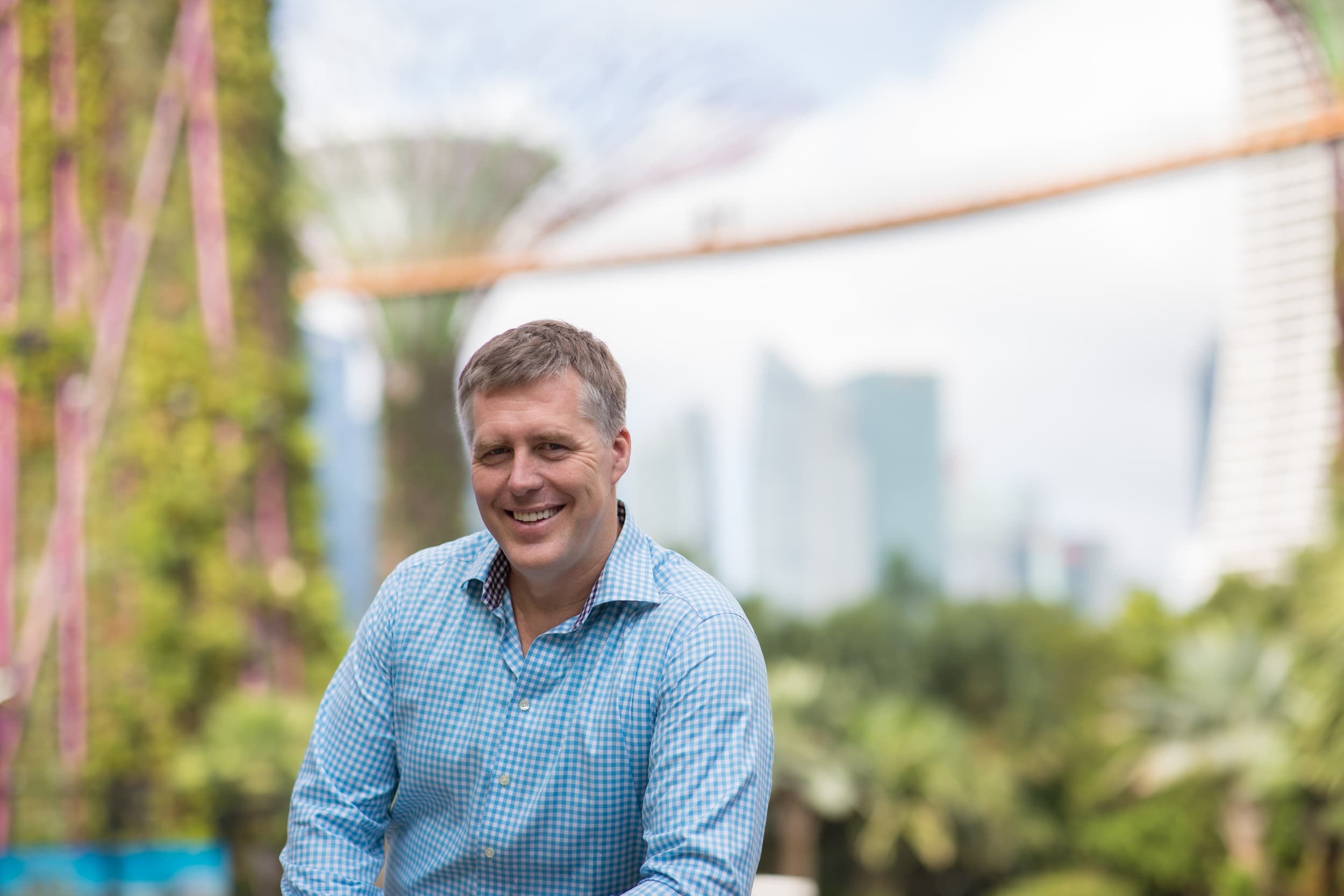
Brett is a four-time founder (Darra Tyres, Gladfish, EzyTrac, Anaboo) and the operator behind AIOS, Anaboo's AI Operating System. He writes from inside the build, installing AI in his own businesses first and reporting back what actually moves the numbers. Based between Singapore, the UK and Australia.