AI process automation amplifies dysfunction as reliably as efficiency
TL;DR
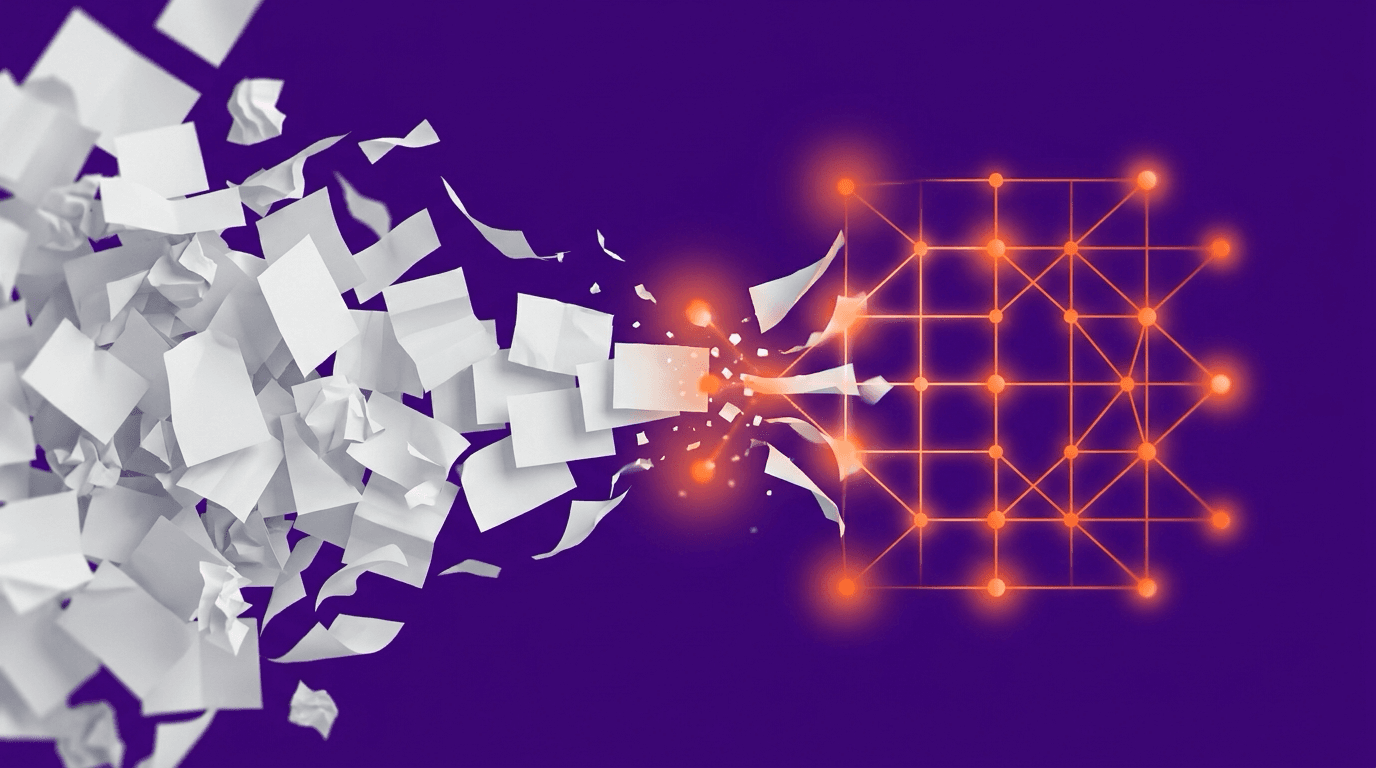
AI amplifies whatever it touches. A good process gets faster and more consistent. A broken process gets broken at scale, with fewer people in a position to notice. Before any AI process automation project, the only question worth asking first is whether the process itself is working. If it is not, fix it before you hand it to a machine.
Why does AI amplify dysfunction as reliably as efficiency?
AI is, at its core, a multiplier. Feed it a good process and it will run that process faster, more consistently, and at a fraction of the cost. Feed it a bad process and it will do exactly the same thing, just with worse consequences.
The reason most businesses miss this is that automation looks like a solution. A sales team drowning in manual follow-up feels relief when a sequence runs itself. A logistics operation frustrated by slow quote turnaround feels progress when AI generates proposals in seconds. The feeling of speed is real. The underlying problem has not moved.
If the follow-up sequence was poorly structured, the AI will send poorly structured messages to every lead at scale, with no one reviewing them. If the quoting logic had gaps, every AI-generated quote will carry the same gaps, delivered faster and with more apparent confidence than any human would have shown. The dysfunction is now systematic.
How do you know a process is actually broken?
A broken process is not always obvious. Teams adapt around dysfunction so thoroughly that the workarounds become invisible. The real signs tend to be quieter than people expect.
Look for these before you touch the automation question:
- Experienced people regularly override the stated procedure because it does not reflect how the work actually gets done
- Outputs vary significantly depending on who runs the process, not just how well they run it
- Rework is common: the process produces outputs that need correcting before they can be used
- No one can explain the process from start to finish without pausing to qualify exceptions
- The process exists because of how the business used to work, not how it works now
If any of these are true, automation will not solve the variance. It will lock it in.
What does auditing the process actually mean?
An audit does not mean a workshop, a consultant, or a diagram on a whiteboard. It means three things done honestly.
First, map what actually happens, not what the procedure says should happen. Walk the process with the people who run it. Record the workarounds, the judgment calls, and the information that gets passed informally. The gap between the documented process and the real process is where dysfunction lives.
Second, identify failure modes. Where does the process break down? What causes it? Is the failure random or predictable? If you cannot name the failure modes clearly, you cannot know whether automation will inherit them or avoid them.
Third, agree on what good looks like, in writing, before you automate anything. You need a definition of a correct output that exists independently of the person reviewing it. If that definition does not exist, or if reasonable people disagree about it, automation will produce outputs at speed without anyone being sure whether they are right.
None of this requires advanced technology. It requires honest conversation and willingness to hear that things are not working as well as assumed.
See where AI fits in your business. Free.
A 45-minute audit. We map the highest-value automations and what they're worth in time and money. No pitch, no pressure.
Which processes are safe to automate, and which are not?
The clearest signal that a process is ready for AI process automation is that it already works well manually, just slowly or at high cost. The bottleneck is capacity, not quality. A human running the process produces reliable, predictable outputs. The only problem is that there are not enough hours in the day.
That is the ideal target for automation. AI augments a capable process by removing the constraint of human time and attention.
A process that produces inconsistent results manually will produce inconsistent results at scale automatically. A process that relies on undocumented judgment calls cannot be automated without first making those calls explicit. A process where the definition of done shifts depending on context needs that ambiguity resolved before any automation touches it.
The hard truth is that many businesses want to automate precisely the processes where the pain is highest. High pain usually means high dysfunction. Chasing the pain without diagnosing the cause is how automation projects fail.
What actually goes wrong when the audit gets skipped?
A roofing business automates its quote follow-up. Volume increases tenfold. So does the number of prospects receiving quotes with missing site details, because the intake form has always had gaps that experienced salespeople filled in manually. Those gaps now go unnoticed until a client calls to ask why their quote does not match the site visit.
A professional services firm automates client onboarding. Contracts go out faster. Errors in the engagement scope go out faster too, because the brief-taking process was never standardised and the AI has no way to flag what it does not know.
A recruitment agency automates candidate screening. Response times drop from days to minutes. Candidates who should not have passed initial screening now move through faster, because the scoring criteria were never clearly defined and the model inherited the inconsistency of the manual process.
None of these are AI failures. They are process failures that AI made more visible, more frequent, and harder to reverse.
How should AI augment a healthy process?
When the process is sound, the role of AI shifts from being a potential risk to being a clear multiplier. It handles repeatable work, removes cognitive load from routine decisions, and frees the people in the process to focus on judgment calls that genuinely need them.
In Anaboo's AIOS model, AI augments a team's capacity by taking ownership of defined, stable tasks while keeping humans in the loop for anything that requires context, discretion, or accountability. That model only works when the tasks being handed to AI are well-defined in the first place.
A well-designed AI process automation does not replace good judgment. It creates space for judgment to be applied where it actually matters.
The businesses getting the best results from AI are not the ones who moved fastest. They are the ones who were disciplined enough to fix the process before touching the technology.
What should you watch for after automation goes live?
Process auditing is not a one-time activity. When AI takes over a process, the feedback loops that humans relied on to catch and correct problems can disappear. Nobody sees every message that goes out. Nobody reads every generated document. Errors that a human reviewer would have caught can accumulate quietly.
Build in checkpoints. Sample outputs regularly. Keep a clear escalation path for flagged anomalies. Treat the first 90 days of any automation as a calibration period, not a success declaration.
If volume increases significantly after automation goes live, increase your sampling rate proportionally. The higher the throughput, the more important it becomes that someone is actively watching the quality of what is going through.
What to do this week
Pick one process you are considering automating. Before any technology conversation, write down what the process is supposed to produce and what it actually produces today. Note the gap honestly.
Walk the process with the person who runs it most often. Ask them what they do when the process does not give them what they need. Document every workaround you hear.
Define a correct output in writing. If you cannot define it clearly enough that someone new could assess whether an output passes or fails, the process is not ready to automate.
Identify whether the pain is capacity pain (the process works, just slowly) or quality pain (it produces inconsistent or wrong results). Only capacity pain is a safe automation target right now.
If the audit reveals quality pain, schedule a process improvement conversation before the automation conversation. Fix the process. Then consider what AI can do with a healthy version of it.
Where to from here
Book a free AI audit and we'll show you what's worth augmenting first in your business, and what isn't.
Live with passion & AI,
Brett
Want this installed in your business?
Bespoke AI implementation across your operations: strategy, build, rollout, and ongoing drift maintenance.
Frequently asked questions
What is AI process automation?
+
AI process automation means using artificial intelligence to run or assist with business processes that were previously done manually. It can handle tasks from email follow-up to document generation to candidate screening, depending on what the process involves.
How do I know if my process is ready to automate?
+
The clearest signal is that the process already works well manually, just slowly or at high cost. If the main constraint is time and volume rather than quality and consistency, that is a solid candidate for automation. If results vary significantly depending on who runs it, fix the variance first.
What happens when you automate a broken process?
+
The process runs faster, at higher volume, with less human oversight to catch mistakes. Errors that a reviewer would have noticed accumulate quietly. The dysfunction becomes systematic rather than occasional.
What should I audit before starting an automation project?
+
Three things: map what actually happens rather than what the procedure says, identify failure modes and their causes, and agree on a written definition of what a correct output looks like. If you cannot do all three clearly, the process is not ready to automate.
Can AI fix a broken process?
+
No. AI can run a process more efficiently, but it cannot repair the underlying logic of a process that does not work. That requires human judgment, process redesign, and agreement on what good looks like before any technology is involved.
What is the difference between capacity pain and quality pain in a process?
+
Capacity pain means the process works well but cannot handle the volume required. Quality pain means the process produces inconsistent or incorrect outputs regardless of volume. Automation is appropriate for capacity pain. Quality pain requires process improvement first.
How do we monitor an automated process once it goes live?
+
Sample outputs regularly, build in checkpoints, and keep a clear escalation path for flagged issues. Treat the first 90 days of any automation as a calibration period. As throughput increases, increase your sampling rate proportionally.

Brett is a four-time founder (Darra Tyres, Gladfish, EzyTrac, Anaboo) and the operator behind AIOS, Anaboo's AI Operating System. He writes from inside the build, installing AI in his own businesses first and reporting back what actually moves the numbers. Based between Singapore, the UK and Australia.